
Workation in Goa - What You Actually Need Before You Book
Planning to work remotely from Goa? Here is the honest breakdown of coworking spaces, monthly costs, seasonality, and finding verified workation stays.
Published 6 July 2026
Frequently Asked Questions
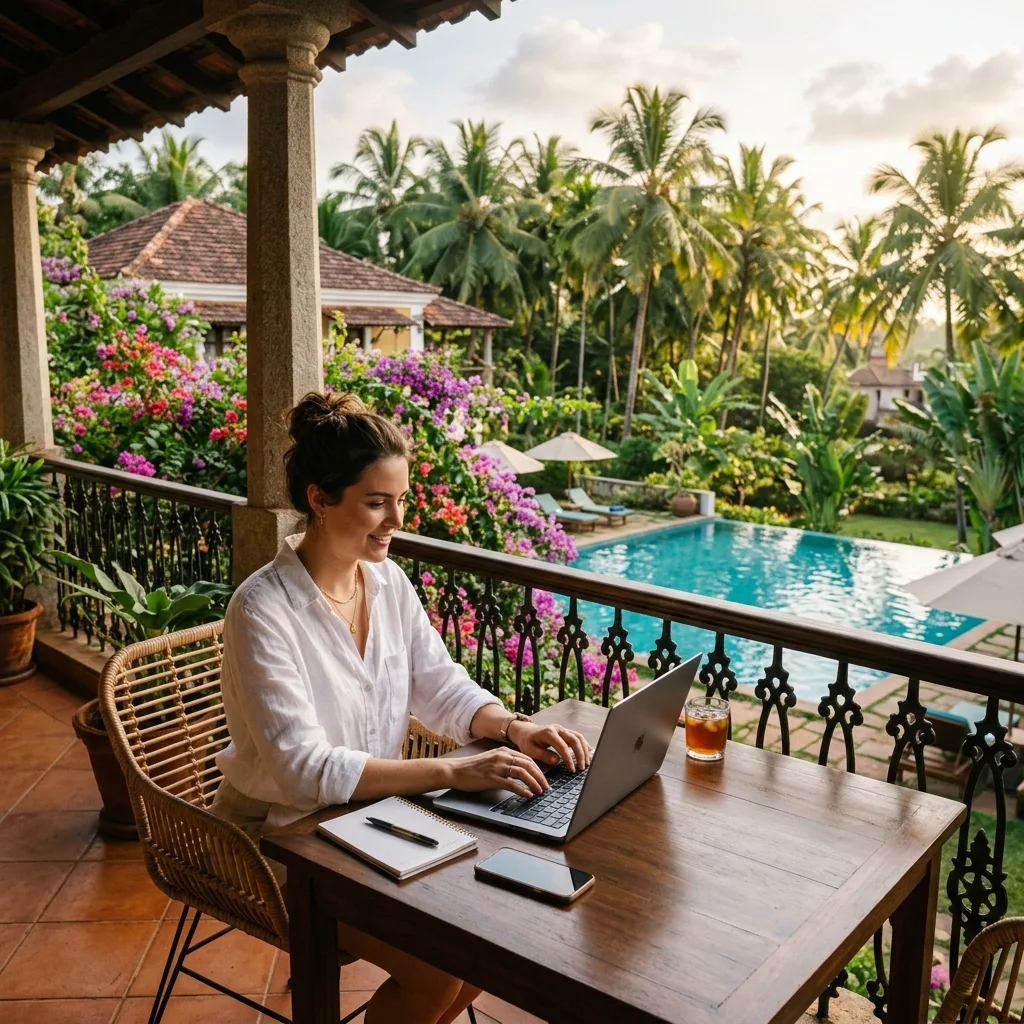
Most people planning to work remotely from Goa start by looking at beaches, cafes, and listings online. It feels like the dream setup - swapping traffic and desk cubicles for warm mornings, pool dips, and evening ocean breezes.
But once you actually start planning, practical questions emerge: Is the internet good enough? Do I need a coworking membership? How much does it actually cost for a month? And how do I avoid arriving at a villa only to discover the Wi-Fi drops every ten minutes?
After speaking to remote workers, founders, and property hosts who make Goa their base, we put together the honest, practical guide to planning a workation in Goa that travel blogs usually skip. And if you're wondering whether a workation in Goa actually fits your budget - we'll give you the real numbers, not the vague estimates.
Do You Even Need a Coworking Space in Goa?
One question that comes up surprisingly often on Reddit and travel forums is whether it's actually worth paying for a coworking membership while you're in Goa.
The honest answer? Probably not every day.
Most people who spend a few weeks working remotely in Goa end up creating a routine that mixes different environments. They'll spend most of the week working from their villa or apartment, visit a café once or twice for a change of scenery, and occasionally head to a coworking space when they need uninterrupted focus, better meeting rooms, or simply want to meet other remote professionals.
That's one of the biggest advantages of a workation - you don't have to work from the same place every single day. A change in environment often helps you stay productive without feeling like you're living the exact same routine you left behind.
If you're staying for two to four weeks, having a good villa with reliable internet should still be your priority. Coworking spaces are better thought of as an extension of your workspace rather than your primary office.
The Best Coworking Spaces in Goa
Goa's coworking ecosystem has grown significantly over the last few years. While it doesn't have the sheer number of options you'll find in Bangalore or Mumbai, it has something those cities often don't - a much stronger sense of community.
Many spaces regularly host networking evenings, founder meetups, startup discussions, yoga sessions and community breakfasts, making them just as valuable for meeting people as they are for getting work done.
91Springboard – Panjim
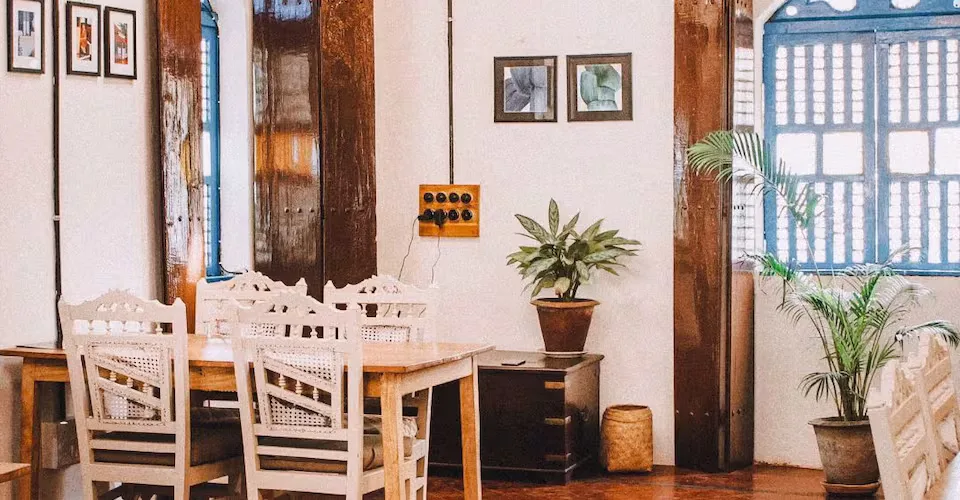
If you're looking for something that feels structured and professional, 91Springboard is one of the safest choices. Located in Panjim, it offers reliable internet, meeting rooms, comfortable seating and the kind of setup you'd expect from a traditional coworking office. It's ideal if your work involves client meetings, presentations or long hours of focused work.
It's also a good option for professionals relocating to Goa for several weeks who still want an office-like environment.
Best for: Corporate professionals, consultants, remote employees and founders.
Clay Coworks – Anjuna
If your idea of a productive day includes meeting other founders, creators and freelancers, Clay Coworks has become one of the more popular choices in North Goa. The atmosphere is considerably more relaxed than a traditional office, and it's common to find people building startups, writing newsletters, recording podcasts or collaborating over coffee. Many people come here as much for the community as they do for the desk.
Best for: Creators, indie hackers, startup founders and freelancers.
NomadGao – Assagao
If you've spent any time researching digital nomads in India, you've probably come across NomadGao. More than just a coworking space, it's built around the idea of community. Throughout the year, it hosts coworking sessions, workshops, founder meetups, skill-sharing events and informal networking gatherings.
For someone travelling alone, it can be one of the easiest ways to meet people who are also working remotely. If your workation is as much about building connections as it is about changing locations, it's definitely worth checking out.
Best for: Digital nomads, solo travellers, creators and remote workers looking for community.
Coworking Cafés
Not every productive day needs to happen inside a coworking office.
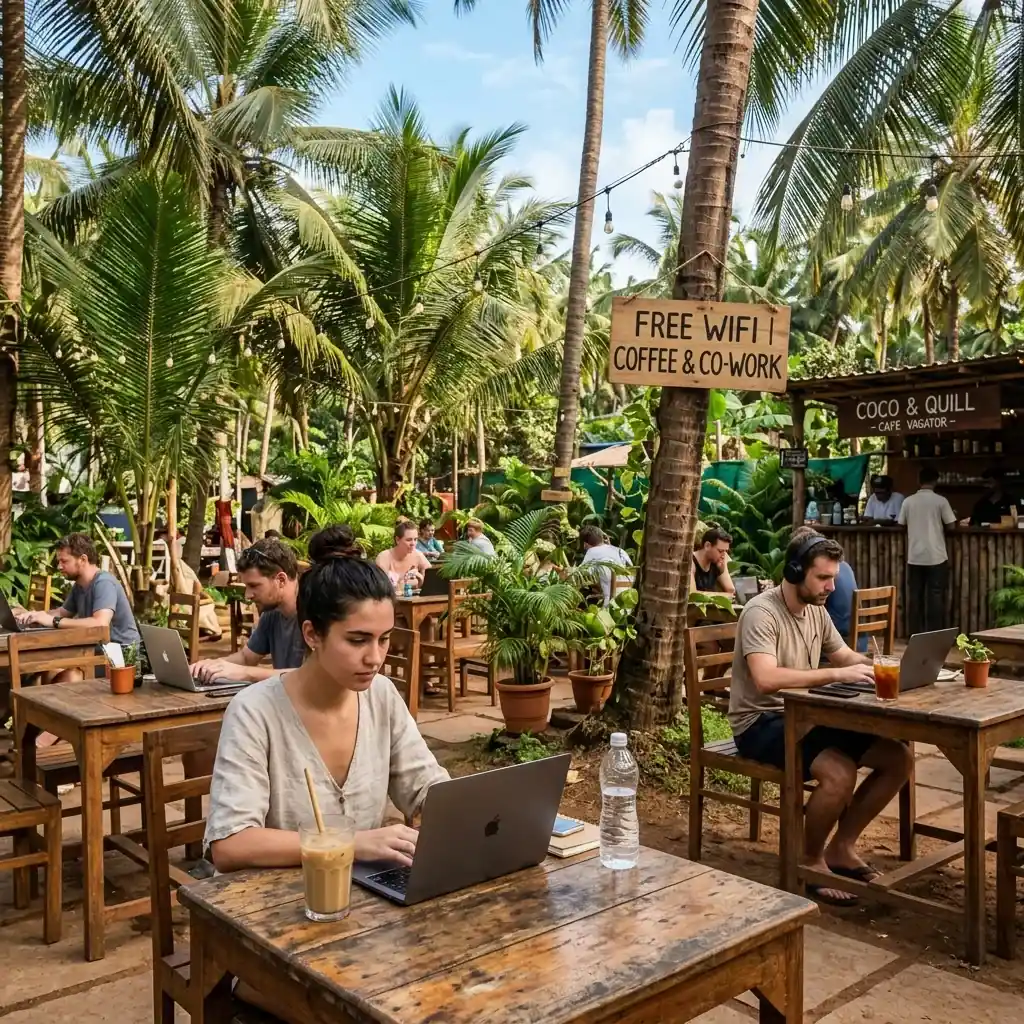
One of the reasons people enjoy working from Goa is the café culture that's developed around places like Assagao (check our dedicated Assagao Villas Guide), Vagator and Anjuna. Many cafés are happy to welcome remote workers during quieter hours, especially on weekdays. Some have reliable WiFi, comfortable seating and plenty of charging points, making them ideal for catching up on emails or getting through a few hours of focused work.
That said, cafés shouldn't replace your primary workspace. Internet speeds can vary, tables fill up quickly during peak season, and taking long client meetings in a busy café isn't always practical. They're best treated as somewhere to spend a few hours rather than somewhere you'll work every single day.
Villa, Café or Coworking? Here's What Actually Works
After speaking to people who've spent weeks working remotely in Goa, a pattern starts to emerge.
Most successful workations don't rely on just one place.
A typical week often looks something like this:
Monday to Wednesday, you work from your villa where you have the most control over your environment. Thursday, you spend the day at a coworking space to break the routine, attend a community event or meet other remote workers. Friday afternoon, you answer emails from a café before heading out for the evening.
That combination keeps things fresh without sacrificing productivity.
Trying to work exclusively from cafés usually becomes tiring after a few days. On the other hand, spending an entire month inside the same villa can feel surprisingly repetitive. Mixing all three environments gives you the flexibility that makes workations enjoyable in the first place.
If You're Planning a Team Workation or Residency
Coworking spaces become even more valuable when you're travelling with a team.
Many startups organise villas for accommodation while booking coworking spaces for brainstorming sessions, workshops or client presentations. It gives everyone the comfort of staying together while still having access to professional meeting rooms and reliable infrastructure when it's needed.
If you're planning a founder retreat, AI residency, creator house or company offsite, it's worth checking whether the coworking space offers private meeting rooms, event areas or group booking options. Several spaces in Goa now cater specifically to remote teams rather than just individual freelancers.
By now you've figured out where you'll stay and where you'll work. The next question is usually the one everyone asks before booking:
"How much is this actually going to cost me?"
That's exactly what we'll break down next. Instead of vague estimates, we'll look at realistic monthly budgets for solo travellers, couples, startup founders and teams - including accommodation, food, scooter rentals, coworking memberships and the platform transaction costs.
What Does a Workation in Goa Actually Cost?
One of the biggest misconceptions about working remotely from Goa is that it's either incredibly cheap or outrageously expensive. The truth is somewhere in the middle.
How much you spend depends almost entirely on where you stay, how long you're staying, and how you book your accommodation.
A week-long holiday during Christmas looks very different from a month-long workation in September. Similarly, staying in a luxury villa in Assagao with a private pool will cost significantly more than renting an apartment in Siolim or sharing a villa with friends.
The good news is that longer stays usually unlock much better value. Many hosts are willing to offer discounts for guests staying two weeks or longer, especially outside the peak tourist season.
To give you a realistic idea, here's what a monthly budget often looks like for different kinds of travellers.
Budget Workation in Goa: What to Realistically Expect
If you're planning a budget workation in Goa, the good news is that it remains one of the most affordable remote-work destinations in India - but what "budget" actually means depends heavily on when you go and how long you stay. A solo remote worker planning a budget workation in Goa outside peak season can realistically manage a full month for between ₹40,000 and ₹55,000, which covers a comfortable studio or shared villa, daily meals, a scooter, fuel, and occasional café work sessions. That number climbs closer to ₹65,000–₹70,000 during October to February when accommodation costs rise with demand.
Solo Remote Worker
If you're travelling alone and don't mind staying in a studio apartment, a private room or sharing a villa with other remote workers, a comfortable monthly budget (read our complete Goa trip budget guide for typical prices and costs) generally falls between ₹40,000 and ₹70,000. That typically includes accommodation, food, scooter rental (see our complete Goa scooter rental guide for pricing and tips), fuel, groceries, internet, and the occasional café or coworking visit.
Couples
For couples, Goa becomes surprisingly affordable.
A one-bedroom apartment or a small villa often works out better value than booking hotel rooms for an extended stay. Depending on the season and location, most couples can expect to spend somewhere between ₹70,000 and ₹1,20,000 for a month, including accommodation, dining out a few times each week, transport and daily expenses.
Founders, Creators & Startup Teams
This is where villas become especially interesting.
Instead of booking five or six hotel rooms, many startups and creator communities now rent an entire villa together. When the cost is split across multiple people, the price per person often ends up being comparable to - or even lower than - staying in individual hotels.
Beyond the financial aspect, there's also the experience. Living under one roof naturally creates more opportunities for brainstorming, casual discussions and collaboration. Some of the best ideas don't happen during scheduled meetings - they happen over breakfast, late-night conversations or while everyone is relaxing by the pool after work. It's one of the reasons founder retreats, AI residencies and creator houses have become increasingly popular in Goa over the last few years.
Don't Forget the Hidden Costs
When planning your budget, accommodation isn't the only thing to think about.
There are a number of smaller expenses that quickly add up over a month:
- Scooter rental
- Fuel
- Groceries
- Coffee and cafés
- Food delivery
- Coworking memberships
- Laundry
- Airport transfers
- Weekend activities
Most of these costs are fairly predictable. The one expense many travellers don't notice until checkout is platform fees.
You might find a property listed at one price, only to discover additional service fees, platform charges or taxes added just before payment. While taxes are unavoidable, the way booking platforms charge hosts and guests can vary significantly - and that ultimately influences what you pay.
Why the Same Villa Can Have Different Prices
This is something many travellers only realise after comparing multiple booking websites.
The exact same property can often appear on several platforms at different prices.
That doesn't necessarily mean one host is charging more than another.
Often, it's because every booking platform operates using a different business model.
Some platforms charge hosts a commission on every reservation, while others include additional service fees during checkout. In many cases, those costs eventually find their way into the final price the guest pays. That's also why many experienced travellers compare listings across multiple platforms before confirming a booking, especially if they're planning a stay of several weeks.
In recent years, a new generation of booking platforms has started experimenting with different approaches. Rather than charging hosts a percentage every time someone books, some platforms use subscription or credit-based systems instead. The idea is fairly simple: hosts recharge their account periodically instead of giving away a portion of every booking, allowing them to price their properties more competitively.
One example is Wayzyy, a newer Goa-focused marketplace built around this host-first approach. Instead of taking a commission on every reservation, hosts simply maintain a credit balance that covers bookings. For travellers, the model isn't really about how the platform earns revenue - it's about the outcome. When hosts keep more of what they earn, they have greater flexibility to offer fairer pricing for guests - especially those booking longer stays.
We'll explore this topic in much more detail in our guide on why the same villa often costs different amounts across booking platforms, where we break down how platform pricing works and what travellers should look for before clicking "Book Now." If you're wondering which booking channels work best for villas, check out our comparison of the best Airbnb alternatives in India for booking villas in Goa.
Can You Reduce Your Monthly Costs?
Absolutely.
The easiest way isn't necessarily finding the cheapest villa - it's booking smarter.
Travelling outside peak season, staying for longer than two weeks, comparing prices across multiple booking platforms, sharing a villa with friends or teammates, and choosing locations just outside the busiest tourist areas can significantly reduce your overall cost without compromising your experience.
Places like Siolim, Morjim, Mandrem, Ashwem, Aldona or parts of South Goa often offer much better value than staying right in the middle of Calangute or Baga, while still keeping you within easy reach of beaches, cafés and coworking spaces.
If you prefer a quieter environment, a South Goa workation around Palolem, Agonda, or Patnem is ideal. Fiber broadband connectivity has expanded significantly in South Goa, making it very reliable for Zoom calls while offering quieter beach shacks, lower noise levels, and private villas at a fraction of North Goa's peak rates.
If you're trying to figure out which part of the state fits your working style and vibe, check out our guide on North Goa vs South Goa.
For many remote workers, that balance between affordability and lifestyle ends up being far more important than simply choosing the cheapest accommodation available.
Best Time to Plan a Workation in Goa
One of the biggest questions people ask is whether there's actually a "best" time to work from Goa.
The answer depends on what kind of experience you're looking for.
If you're visiting purely for the weather and want to experience Goa at its liveliest, October to February is hard to beat. The skies are clear, restaurants and cafés are buzzing, coworking spaces host regular community events, and there's always something happening over the weekend. The trade-off, however, is that this is also the busiest and most expensive time of the year. Accommodation gets booked well in advance, traffic increases in popular parts of North Goa, and prices naturally rise with demand.
If your priority is getting work done while still enjoying Goa, many experienced remote workers actually prefer the shoulder season between March and early May. The crowds begin to thin out, properties become more affordable, and you'll have a much easier time finding longer-stay discounts. Cafés are quieter, beaches are less crowded, and it's easier to settle into a daily routine.
Then there's the monsoon.
At first glance, most people rule it out completely - but that's a mistake.
Between June and September, Goa transforms into a completely different destination. Everything becomes greener, waterfalls come alive, cafés become quieter, and the pace of life slows down considerably. If you don't mind the rain and you're looking for a peaceful month to focus on work, it can actually be one of the most rewarding times to stay. Accommodation prices are usually much lower than during peak season, making it particularly attractive for freelancers, founders, and remote workers planning longer workations.
The only thing to keep in mind is that heavy rainfall can occasionally affect travel plans, outdoor activities and, in some areas, internet or electricity. Choosing a property with reliable fibre internet and backup power becomes even more important during these months.
Ultimately, there isn't one perfect season for everyone.
If you're looking for networking events, social life and a vibrant atmosphere, visit between October and February. If you're trying to balance productivity with better value, March to May is often a great choice. And if your goal is uninterrupted focus in a quieter environment, the monsoon months might surprise you.
Planning Your Workation? Here's One Last Tip
No matter which season you choose, one decision has a bigger impact on your experience than almost anything else - choosing the right place to stay.
A beautiful villa means very little if the internet isn't reliable, there's no proper workspace, or you spend half your day travelling between cafés and coworking spaces. Likewise, a property that looks ordinary on the surface might end up being the perfect workation base because it has fast fibre internet, power backup, a comfortable desk, and is located close to everything you need.
That's one of the reasons we're building Wayzyy.
Rather than being just another booking platform, Wayzyy is being built specifically around the needs of modern travellers and hosts. Alongside villas, apartments and vacation homes across Goa, we're introducing Workation Verified stays - properties that meet practical standards remote workers actually care about, such as reliable high-speed internet, dedicated workspaces, backup power, comfortable long-stay setups and other amenities that make working remotely easier.
We're also taking a different approach to pricing.
Instead of charging hosts a commission on every booking, Wayzyy follows a simple credit-based model. Hosts recharge credits based on their bookings rather than giving away a portion of every reservation. While that change happens behind the scenes, the idea is straightforward: when hosts keep more of what they earn, they have greater flexibility to offer fairer pricing for guests - especially those booking longer stays.
For travellers, that means a platform focused on transparent pricing, carefully verified stays, and a better experience from the moment you start searching to the day you check out.
Whether you eventually book through Wayzyy or another platform, our advice remains the same: compare your options, ask the right questions before booking, and choose a stay that's designed for the way you actually work - not just one that looks good in photos.
Final Thoughts
A workation isn't about escaping work.
It's about changing the environment around it.
The best workations aren't measured by how many beaches you visited or cafés you worked from. They're the ones where you managed to stay productive, discovered a new routine, met interesting people, and returned home feeling refreshed instead of burnt out.
Goa continues to be one of the best places in India to make that happen. Whether you're a freelancer looking for a change of scenery, a startup founder planning an offsite, a creator organizing a residency, or a remote employee swapping city traffic for ocean sunsets, there's a place here that fits the way you work.
We hope this guide helped answer the questions that most travel blogs skip over. As Goa's remote work ecosystem continues to grow, we'll keep updating this guide with new coworking spaces, neighbourhood insights, long-stay tips and practical advice to help you plan your next workation with confidence.
And if you're looking for stays that are built with remote workers in mind, keep an eye on Wayzyy. We're working to make finding the right workation home just as easy as planning the workation itself.
Frequently Asked Questions
What is the minimum budget for a workation in Goa?
A realistic minimum budget for a solo budget workation in Goa is ₹40,000–₹55,000 per month outside peak season. This covers a studio apartment or shared villa (₹15,000–₹25,000), food (₹8,000–₹12,000), scooter rental (₹8,000–₹10,000), fuel, and occasional coworking or café sessions. Couples can split accommodation costs, bringing the per-person budget down further. Monsoon months (June–September) offer the lowest accommodation prices, making them ideal for a budget workation in Goa.
Do I need a coworking space for a month-long workation in Goa?
Probably not every day. Most remote workers mix environments: working from their villa or apartment most of the week, visiting cafes once or twice, and heading to a coworking space for dedicated focus, meetings, or networking events.
How much does a monthly workation in Goa cost?
For solo remote workers, a realistic monthly budget is ₹40,000 to ₹70,000. For couples, it ranges between ₹70,000 and ₹1,20,000. Startups and teams sharing a large villa can split costs, making premium setups highly affordable per person.
What is a "Workation Verified" stay on Wayzyy?
Workation Verified stays are properties on Wayzyy that have been checked to meet specific criteria for remote work, including high-speed fiber internet, dedicated workspace desks, power backup, and long-stay amenities.
Which is the best month to do a remote-work trip to Goa?
October to February is best for socializing and networking events. March to May offers quieter spaces and better long-stay discounts. June to September (monsoon season) is ideal for pure focus, lush greenery, and the lowest accommodation prices.
Are there good coworking spaces in Goa?
Yes, Goa has a thriving coworking ecosystem. Highly recommended options include 91Springboard in Panjim for structured corporate workspaces, Clay Coworks in Anjuna for creator communities, and NomadGao in Assagao for nomad events.
Want to list your villa on Wayzyy?
Email us at hello@wayzyy.com - Wayzyy is launching soon in Goa.