
Aguad Port & Jail Complex (2026): The Honest Guide to the Monsoon Heritage Tourism Initiative
Goa Tourism's Monsoon Heritage Tourism Initiative at Aguad Port & Jail Complex explained - what's confirmed, what isn't, and how to actually plan a visit between June and September.
Published 9 August 2026
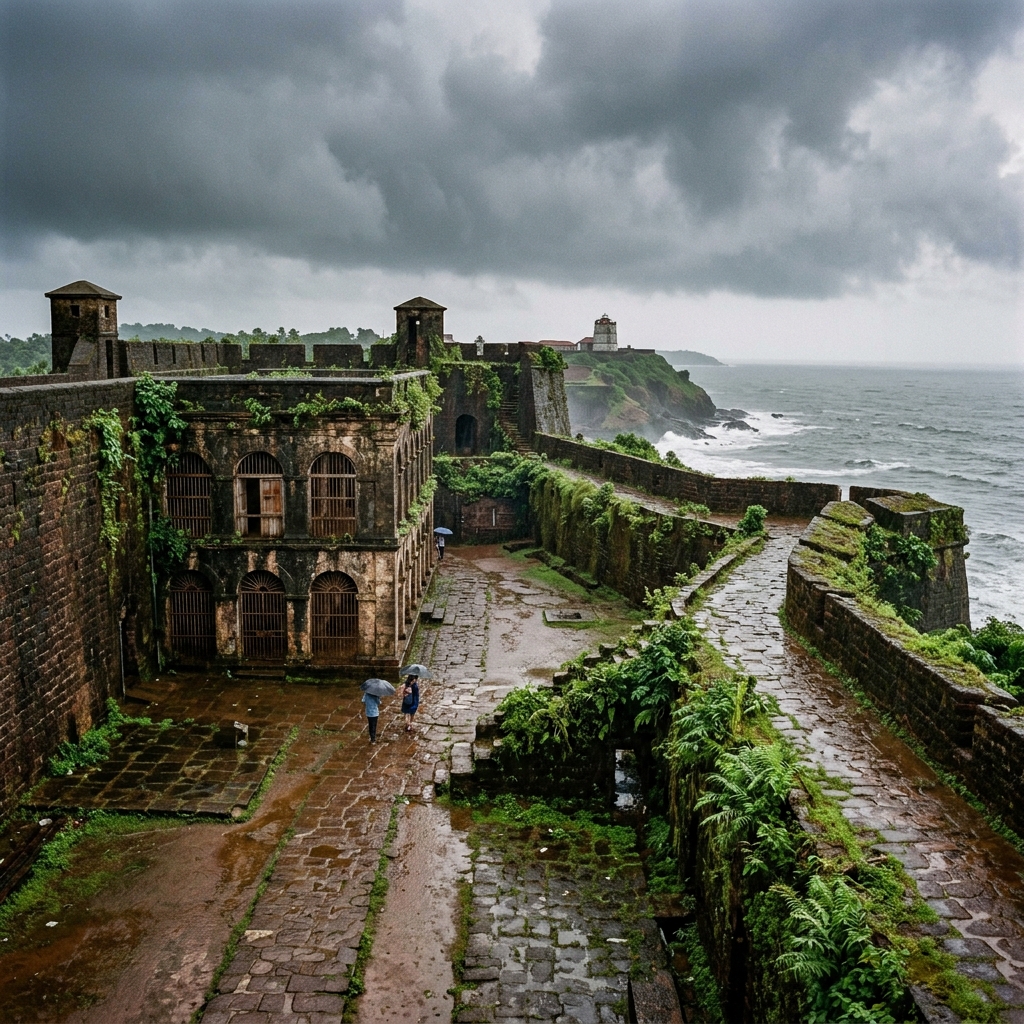
You've probably seen the headlines by now - Aguad Port & Jail Complex is launching a Monsoon Heritage Tourism Initiative, and Goa Tourism wants more travelers to show up between June and September. The press release sounds promising. But here's the problem: nearly every news report just repeats the same announcement without telling you what you'll actually do once you get there, how much it costs, or whether it even runs on the day you plan to visit.
This guide cuts through the noise. We'll explain what the Monsoon Heritage Tourism Initiative is supposed to include, what details still aren't confirmed as of early 2026, and how to plan a trip that doesn't depend on vague coverage. You'll get the heritage backstory of the Aguad complex, practical directions from North and South Goa, monsoon-specific packing advice, and the exact questions to ask before you book tickets or leave your hotel.
This is for travelers who want more than beach-shack afternoons and monsoon Instagram reels. If you need fixed schedules, guaranteed covered walkways, and verified online booking before you commit, parts of this visit may frustrate you. But if you don't mind confirming details a day ahead and carrying a rain cover, Aguad in the monsoon can feel refreshingly different from the rest of the state.
What Is the Aguad Monsoon Heritage Tourism Initiative Actually About?
What the official announcement said (and what it left out)
The press release from Goa Tourism says the Aguad Port & Jail Complex will stay active through the monsoon months with a curated calendar of heritage programming. The idea is to turn the restored Portuguese-era site into a wet-weather cultural destination, rather than letting it sit idle while the beaches empty out. The announcement mentions guided heritage walks, storytelling sessions about the jail and port, pop-up exhibitions, and possibly small performances or workshops inside the covered courtyards. There's also talk of a maritime interpretation trail and monsoon-themed photo walks that use the rain-soaked ramparts as a backdrop.
What the announcement left out is just as important. It didn't publish fixed opening hours, a per-person ticket price, an official booking link, or a day-by-day calendar. It also didn't clarify which areas will remain open during heavy rain, whether guided walks require pre-registration, or what the cancellation policy is if a session is called off. As of early 2026, those details are still being worked out on the ground. That means the initiative is real, but the experience isn't yet plug-and-play. You'll need to confirm timings, entry rules, and weather contingencies shortly before you go rather than relying on a single official webpage.
A quick heritage backstory: fort, port, and jail
To understand why the monsoon initiative matters, it helps to know what you're walking through. The larger Aguada hill and headland were fortified by the Portuguese in the early 1600s to guard the mouth of the Mandovi River and protect the port of Old Goa from Dutch, Maratha, and pirate attacks. The name itself comes from the Portuguese água, a reference to the freshwater spring inside the fort that could replenish ships before they crossed the Arabian Sea. For centuries, the fort was a strategic checkpoint, a lighthouse station, and a symbol of colonial control over the coastline.
The jail portion of the complex has a more recent story. The Central Jail at Aguada operated for decades, finally closing in 2015 when inmates were moved to a newer facility at Colvale. After the closure, the state converted the compound into a heritage and cultural space, opening the Aguad Port & Jail Complex with galleries on Goan maritime history, the freedom struggle, and local art. The old cell blocks, arched corridors, and central watchtower were preserved rather than demolished, giving the site an unusually layered atmosphere: sixteenth-century ramparts on one side, twentieth-century prison architecture on the other.
That layered history is what the monsoon initiative tries to highlight. In dry season, the complex can feel like a tidy museum. In the rains, with fewer visitors and grey light filtering through the barred windows, the same corridors feel heavier and more immediate. The initiative isn't just about keeping a monument open - it's about presenting the fort, the port, and the jail as living heritage rather than a polished backdrop.
Planning your stay nearby? Get it up to 20% cheaper on Wayzyy
Statistically speaking, global booking platforms mark up rates by up to 20% to cover commissions and service fees. Because Wayzyy doesn't add any markup from our end, you get direct direct-from-host pricing for the same property.
Our team is working hard to get in front of your eyes. With over 500 properties and 50 hosts already onboarding, we are increasing the options before our launch so that we have choices for all your travel needs.
What monsoon heritage tourism actually looks like day-to-day
No two monsoon days at the site are identical, which is both the charm and the complication. On a typical operating day, you'd arrive at the visitor entrance near Sinquerim, sign in at a small reception counter, and join a guided walk that loops through the ramparts, the old jail blocks, and the maritime gallery. Guides tend to be local history students, retired teachers, or trained heritage volunteers who explain how the fort guarded the river, how prisoners lived in the cell blocks, and how the port connected Goa to the larger Indian Ocean trade.
Between walks, there may be short storytelling sessions inside one of the covered courtyards. These are usually bilingual, mixing English with Konkani, and focus on tales of prisoners, shipwrecks, monsoon voyages, and local folklore. On festival weekends - especially around Sao Joao in June or the Assumption in August - the programming can expand to include folk music, traditional dance, or craft workshops. You might learn to weave a small fishing-net panel, paint a Portuguese-inspired azulejo tile, or listen to a fado-influenced set under a temporary canopy.
If the weather turns, the plan changes quickly. Outdoor rampart walks are usually the first thing to pause, while the indoor galleries and jail blocks stay open. Some days the site may switch entirely to self-guided exploration with a printed map and a few staff members on hand. Other days, if the rain is too heavy or the access road floods, the whole complex can shut down without much notice. The key is to treat the schedule as a possibility, not a promise.
Food and drink options during the monsoon are limited. There may be a small tea-and-snacks counter or a weekend pop-up serving patoleo, sanna, or hot chai, but don't count on a full cafe. Carry water and a light snack, and plan to eat properly once you get back to Candolim or Panaji.
Timing and weather considerations
The southwest monsoon arrives in Goa in early June, peaks in July and August, and begins to retreat in September. For the heritage initiative, June and September are usually the most reliable months: the rain is present but less violent, and the landscape is either freshly green or beginning to dry out. July and August deliver the heaviest downpours, especially in the afternoons. If you visit then, aim for a mid-morning slot after an overnight shower has cleared the air, or a late-afternoon window when the sky sometimes breaks for an hour or two.
Temperatures hover in the high twenties during the day, dropping slightly after rain. Humidity is the bigger issue. Cotton or quick-dry clothing works far better than denim, and a light long-sleeved shirt helps against both sunbreaks and mosquitoes. The stone surfaces inside the old buildings can stay damp and slippery, so shoes with good grip are non-negotiable. Sandals are a bad idea on the ramparts and in the jail corridors.
Before leaving your hotel, check three things: the weather radar for the next four to six hours, the official Goa Tourism social media accounts for closure notices, and the condition of the Sinquerim access road. A quick call to the site reception can save you a wasted trip. If you're staying at a Wayzyy-listed villa near Sinquerim or Candolim, your host can often give you a faster, ground-level update than any website.
How This Fits Goa's Broader Monsoon Tourism Push
Goa has been trying to recast the monsoon as a travel season rather than an off-season for several years. The state tourism department promotes hinterland routes, spice plantation tours, trekking to Dudhsagar, temple and church festivals, wellness retreats, and heritage sites as alternatives to the beach. The Aguad initiative is part of that larger strategy: it gives visitors a reason to leave their hotel on a rainy day, it spreads tourist spending beyond the coastal belt, and it creates work for guides, artists, and local vendors during the quiet months.
The push also reflects a shift in how Goa markets itself. The beach-and-party image still dominates international advertising, but domestic travelers and repeat visitors are increasingly interested in culture, food, and history. A rainy afternoon at a restored fort and jail complex plays directly to that audience. It's slower, more educational, and less weather-dependent than a day on the sand.
For the state, the initiative is a low-risk experiment. The infrastructure is already built; the cost is mainly staffing, programming, and marketing. For travelers, it's a chance to see how Goa behaves when the crowds thin out. The trade-off is maturity: unlike a decades-old spice plantation tour, the monsoon heritage calendar is still finding its rhythm.
What it means for off-season travelers
If you're visiting Goa between June and September, you're already accepting a certain amount of unpredictability. Beach shacks are closed or half-empty, water sports are mostly shut down, and some restaurants operate on reduced hours. In exchange, you get green hills, lower accommodation rates, uncrowded roads, and a more local pace of life. The Aguad initiative fits that rhythm perfectly.
Off-season travelers tend to fall into two camps. The first group wants a bargain and doesn't mind adjusting plans. For them, the complex is a strong addition to a monsoon itinerary: it's indoors-ish, culturally rich, and unlikely to be packed. The second group wants the classic Goa experience and is frustrated by rain. For them, the site may feel like a consolation prize rather than a highlight.
The practical difference is mindset. If you arrive expecting a slick, all-weather heritage park, you'll be disappointed. If you arrive expecting a moody, partially restored colonial complex that may or may not have a guide available, you'll likely enjoy it. Bring a flexible schedule, a reliable rain jacket, and a backup plan in Panaji or Candolim in case the complex closes.
Is Aguad Worth Visiting During the Monsoon?
The short answer: yes, but only if you're comfortable with uncertainty.
The honest case for going
June through September turns the complex into a quiet, windswept space. You won't queue behind bus groups or fight for a parking spot near the main gate. The laterite walls look darker and more textured when they're wet, and the old jail blocks feel less like a museum display and more like a working ruin. Temperatures stay in the high twenties, so you can walk the grounds without the March sun pressing down on your neck. If the initiative runs guided walks or small performances as hinted, a rainy afternoon here could give you a sense of the place that dry-season visitors rarely get.
There's also a photographic argument. Monsoon light is soft and diffused, which flatters the ochre stone, the rusted bars, and the green vegetation pushing through the walls. The sea in the background is usually grey and dramatic, and the lack of crowds means you can frame shots without a dozen strangers in them. For anyone interested in architecture, colonial history, or documentary photography, this is arguably the best time to visit.
The honest downsides
Nothing about the schedule is guaranteed yet. As of early 2026, the authorities haven't published fixed opening hours, ticket prices, or a calendar of monsoon events. A heavy downpour can shut down outdoor routes, especially the exposed bastion walks and any open courtyards. The access road from Sinquerim gets muddy quickly, and local taxis often charge monsoon rates or refuse the trip until the rain eases. Carry a rain cover, wear shoes with grip, and confirm the day's plan by phone before leaving your hotel.
Accessibility is another concern. The site has steps, uneven surfaces, and few ramps. Wet stone makes everything harder, and there's limited covered seating if you need to wait out a shower. Families with strollers, travelers with knee problems, or anyone using a wheelchair should ask about current access conditions before committing.
Finally, the experience can feel thin if the programming doesn't run. On a quiet weekday with no guide and no pop-up events, you're essentially paying for entry to a partly restored jail and a few galleries. That's still interesting for history-minded visitors, but it's not a full-day attraction. Plan it as a two- to three-hour stop, not the centerpiece of your trip.
Who should skip it and go elsewhere
If you need a fixed itinerary and confirmed online tickets, don't make Aguad your main heritage stop - you'll be better served by a covered museum or gallery with clearer timings. Families with very young children or travelers with limited mobility should also wait for the dry season, when paths are easier and the full site is more likely to stay open.
Beach-focused travelers who only want sun and sand should skip it too. The monsoon heritage initiative isn't a rainy-day entertainment substitute for a beach vacation; it's a different kind of travel experience entirely. If that doesn't sound appealing, head south to Palolem for empty-beach walks or inland to a spice plantation where the rain is actually part of the charm.
Entry, Timings & What to Confirm Before You Go
- Entry Fee: Not consistently published as of early 2026. Some heritage sessions are free walk-in, others may be ticketed on-site. Carry cash and a UPI app.
- Timings: No fixed daily hours confirmed yet - some editions run weekends or festival long weekends only. Confirm the current schedule before leaving your hotel.
- Weather Contingency: Outdoor rampart walks pause first in heavy rain; indoor galleries and jail blocks tend to stay open longer. Full closures can happen with little notice.
- Access: The Sinquerim access road can get muddy in heavy rain - check conditions and taxi availability before you set out.
Frequently Asked Questions
Final Thoughts: Is Aguad Port & Jail Complex Monsoon Heritage Tourism Initiative Worth It?
If you've already seen Goa's beaches and want a slower, more thoughtful monsoon day, this initiative is worth adding to your itinerary. The rain-washed ramparts of Aguad, the sound of the sea in the background, and a guide who actually explains the fort and jail history beat scrolling through another rainy-day hotel lobby.
That said, this isn't a polished theme-park experience. Schedules can shift, signage is sometimes patchy, and you may need to confirm timings the morning of your visit. Families with very young children, travelers who need step-free access, or anyone expecting a fixed daily show may find it frustrating.
Go if you like heritage walks, quieter monsoon afternoons, and the idea of seeing a Goa that predates the beach shacks. Skip it if you're only after sun, sand, and guaranteed entertainment. For the curious traveler, Aguad in the rains delivers something the peak-season crowds rarely get - space, stories, and a fort that finally feels like its own.
Want to list your villa on Wayzyy?
Email us at hello@wayzyy.com - Wayzyy is launching soon in Goa.