
Dudhsagar Falls Goa (2026): Is It Really Worth Visiting? The Honest Guide
Planning a trip to Dudhsagar Falls in Goa? Read our complete, honest guide to the jeep safari, trekking regulations, safety, swimming, and travel times.
Published 14 August 2026
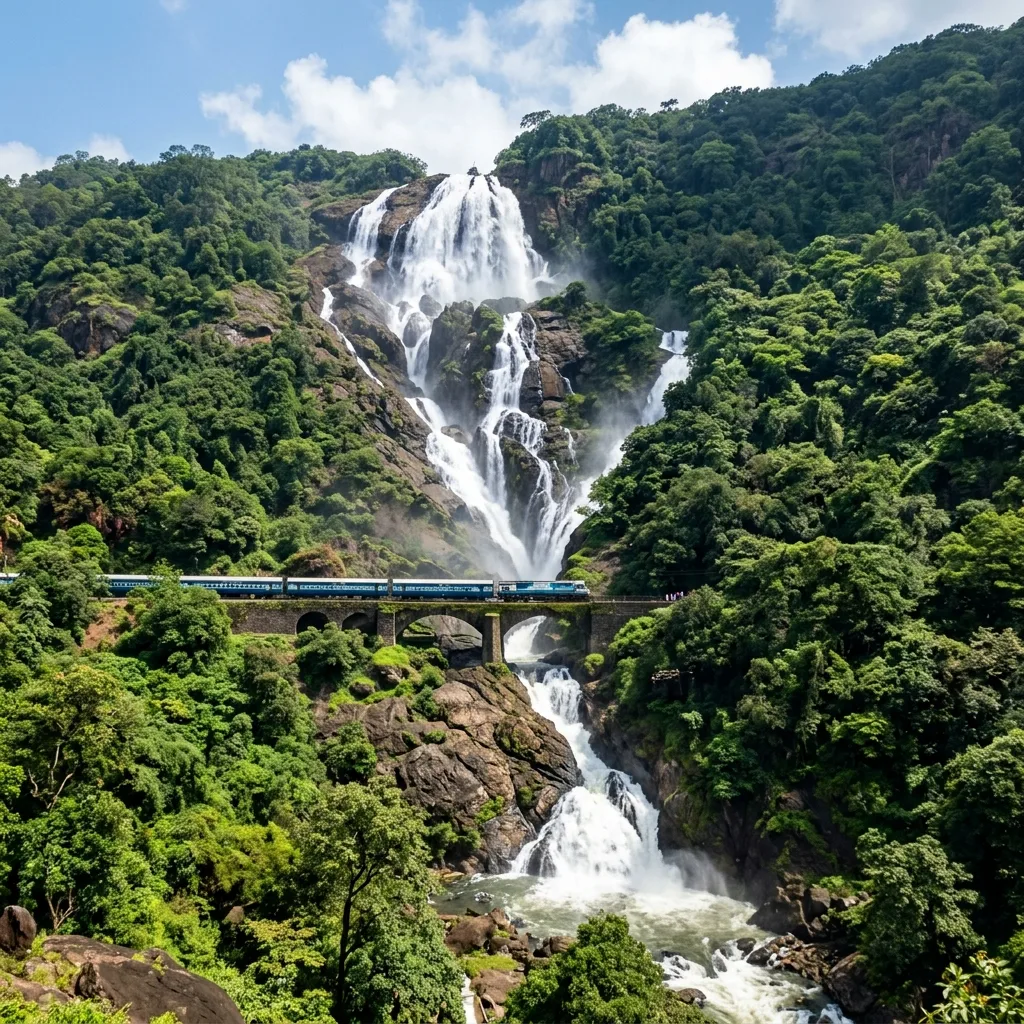
If you've spent even a few minutes researching Goa, you've probably come across photographs of a massive waterfall crashing down beside a railway bridge, surrounded by dense forests and mist. That's Dudhsagar Falls, one of India's tallest waterfalls and easily one of the state's most famous natural attractions.
Unlike Goa's beaches, Dudhsagar isn't somewhere you casually stop by on the way to another destination. Visiting it takes planning. You'll need to decide how you're getting there, whether a jeep safari is the right option, what time to leave, and even which season offers the best experience. Depending on the time of year, access routes, water levels, and visitor numbers can change significantly.
That's also where many online guides fall short. Some make it sound like an easy half-hour attraction, while others still recommend trekking routes that are no longer permitted or practical. The result is that many first-time visitors arrive with unrealistic expectations and end up spending more time figuring out logistics than enjoying the destination itself.
The reality is much simpler.
Dudhsagar Falls is absolutely worth visiting if you're prepared for it. The waterfall is spectacular, the surrounding forests are part of the Bhagwan Mahavir Wildlife Sanctuary, and the journey itself - whether by jeep or through the surrounding landscape - is part of what makes the experience memorable. At the same time, it isn't the quiet, untouched paradise that older travel blogs often describe. During peak tourist season, you should expect queues for jeep safaris, shared transport, and plenty of fellow visitors hoping to capture the same iconic view.
This guide is designed to help you plan around those realities. We'll cover the best ways to reach Dudhsagar Falls, explain how the jeep safari works, discuss whether trekking is still an option, look at swimming and safety, break down the best time to visit, and share the common mistakes that travellers make before they arrive.
If you're already staying in South Goa, destinations like Palolem, Agonda, and Patnem make excellent bases for a day trip to Dudhsagar Falls. After spending a morning exploring the waterfall, many travellers return to the coast for a slower evening by the beach. That's one of the advantages of planning your accommodation carefully, and platforms like Wayzyy make it easy to find vacation rentals across South Goa that let you combine Goa's famous beaches with some of its most memorable inland experiences without changing where you're staying.
Is Dudhsagar Falls Worth Visiting?
For most travellers, the answer is yes. In fact, if you're spending four or five days in Goa, Dudhsagar Falls is one of the few attractions that's genuinely different from everything else the state offers. While Goa is best known for its beaches, cafés, and laid-back coastal villages, Dudhsagar gives you a chance to experience its forests, wildlife, and rugged landscapes instead.
That said, whether you enjoy the experience depends largely on your expectations.
If you're hoping for a quiet waterfall where you can spend an entire day relaxing in complete solitude, Dudhsagar probably isn't the right destination. It's one of Goa's most visited attractions, especially between October and February, so you'll be sharing the experience with plenty of other visitors. Jeep safaris often operate continuously during peak season, and the viewing areas can become busy as groups arrive throughout the morning.
On the other hand, if you understand that Dudhsagar is best experienced as a well-planned day trip rather than a hidden escape, it's easy to see why it remains one of the highlights of a Goa itinerary.
The waterfall itself is undeniably impressive. Cascading from a height of over 300 metres (around 1,000 feet) in four distinct tiers, Dudhsagar becomes even more spectacular after the monsoon, when enormous volumes of water thunder down the cliffs. The name Dudhsagar, which translates to "Sea of Milk," comes from the way the white water spreads across the rock face, creating the appearance of flowing milk from a distance.
Beyond the waterfall, the surrounding landscape plays an equally important role in the experience. Located inside the Bhagwan Mahavir Wildlife Sanctuary, the journey takes you through dense forests, river crossings, and winding roads that feel completely different from Goa's coastline. For many visitors, the drive and the jeep safari become just as memorable as the waterfall itself.
Dudhsagar is particularly well suited for:
- Travellers visiting Goa for the first time.
- Families looking to combine beaches with nature.
- Couples planning a scenic day trip.
- Photography enthusiasts.
- Anyone interested in seeing a different side of Goa beyond the coast.
It may be less appealing if your primary goal is to spend every day by the beach. Since visiting Dudhsagar usually takes most of the day - including travel time - it makes the most sense for travellers staying in Goa for at least four or five days. If you're only visiting for a weekend, you may prefer to focus entirely on the beaches and save Dudhsagar for a longer trip.
One of the biggest advantages is that the waterfall fits naturally into a South Goa itinerary. Many visitors staying around Palolem, Agonda, or Patnem leave early in the morning, spend several hours exploring Dudhsagar, and return to the coast by evening. That way, you get to experience two completely different sides of Goa in a single day - lush forests in the morning and a sunset by the Arabian Sea in the evening.
Before planning your visit, however, it's important to understand where Dudhsagar is located and what the different transport options actually involve. That's often where first-time travellers make their biggest mistakes, and knowing the logistics in advance can save you a considerable amount of time.
Where Is Dudhsagar Falls?
Dudhsagar Falls is located on the Goa–Karnataka border inside the Bhagwan Mahavir Wildlife Sanctuary and Mollem National Park. Although it's one of Goa's most famous attractions, many first-time visitors are surprised to learn that it isn't close to the beaches. Reaching the waterfall requires travelling inland through forests, making it a completely different experience from a typical day spent along the coast.
The nearest town is Mollem, which serves as the main gateway for most visitors arriving by road. From here, travellers usually continue towards the designated jeep safari point or other approved access routes, depending on the season and current forest regulations.
To give you a better idea of travel times, here are the approximate distances from some of Goa's most popular destinations:
| Starting Point | Approximate Distance | Travel Time |
|---|---|---|
| Palolem / Patnem | 65–75 km | Around 2 hours |
| Agonda | 70–80 km | Around 2 hours |
| Margao | 45–50 km | Around 1.5 hours |
| Panjim | 60–70 km | Around 2 hours |
| Calangute / Baga | 75–85 km | Around 2.5 hours |
These travel times can vary depending on traffic, road conditions, and the season, particularly during holidays and long weekends when Goa experiences a significant increase in visitors.
One of the biggest misconceptions is that Dudhsagar is a quick stop that can easily be squeezed into a packed sightseeing schedule. In reality, it's best treated as a full-day excursion. Between driving to Mollem, waiting for your jeep or transport, spending time at the waterfall, and returning to your accommodation, most travellers should expect to dedicate at least six to eight hours to the experience.
For visitors staying in South Goa, the journey is generally more convenient than many people expect. Areas like Palolem, Agonda, and Patnem offer a comfortable balance - you can enjoy the beaches for most of your holiday while still taking a single day to explore Goa's forests and waterfalls. That's one reason many experienced travellers prefer staying in South Goa rather than changing hotels every couple of days.
Planning your stay nearby? Get it up to 20% cheaper on Wayzyy
Statistically speaking, global booking platforms mark up rates by up to 20% to cover commissions and service fees. Because Wayzyy doesn't add any markup from our end, you get direct direct-from-host pricing for the same property.
Our team is working hard to get in front of your eyes. With over 500 properties and 50 hosts already onboarding, we are increasing the options before our launch so that we have choices for all your travel needs.
If you're planning your itinerary, it's worth scheduling Dudhsagar early in your trip rather than on your final day. Unexpected weather, forest restrictions, or seasonal changes can occasionally affect access, and leaving some flexibility in your plans gives you the option to adjust if needed.
How to Reach Dudhsagar Falls
Getting to Dudhsagar Falls is one of the most confusing parts of planning a visit. If you've watched a few YouTube videos or read older travel blogs, you've probably come across completely different suggestions - some recommend driving all the way, others talk about trekking along the railway tracks, while many mention the famous jeep safari.
The truth is that access to Dudhsagar has changed over the years, mainly because the waterfall lies inside a protected forest area. Depending on the season and forest department regulations, some routes that were popular in the past may no longer be available or practical. That's why it's always better to plan using the latest information rather than relying on articles written several years ago.
For most visitors, there are four practical ways to reach Dudhsagar Falls:
1. By Jeep Safari (The Most Popular Option)
If it's your first visit, the jeep safari is usually the simplest and most convenient choice. After reaching the designated entry point near Mollem, visitors transfer into authorised jeeps that travel through forest tracks, cross small streams, and eventually reach the waterfall. The ride itself is part of the experience, taking you through landscapes that aren't accessible by regular vehicles.
This option is suitable for almost everyone, including families, groups, and travellers who don't want to undertake a long hike. Since jeep services operate under forest regulations, they're also the route followed by the majority of organised tours.
2. By Self-Drive Car or Scooter
Many travellers assume they can drive directly to the base of the waterfall, but that's not how the journey works. You can comfortably drive or ride a scooter to the designated parking area near the sanctuary, but private vehicles are generally not allowed to continue through the protected forest to the waterfall itself. From there, you'll need to use the authorised transport available for visitors.
If you're staying in South Goa, renting a scooter or car can still be a convenient option for reaching Mollem, especially if you enjoy travelling at your own pace and want the flexibility to explore nearby attractions afterwards.
3. By Taxi
Hiring a taxi is another straightforward choice, particularly for families or travellers who don't want to drive themselves. Most taxi drivers are familiar with Dudhsagar Falls and will drop you at the appropriate entry point before waiting or returning later, depending on the arrangement you've made. While this is usually the most comfortable option, it's also one of the more expensive ways to visit, especially if you're travelling alone. Groups often find taxis to be a practical choice since the cost can be shared between several people.
4. By Train
One of the most iconic images of Dudhsagar Falls shows a train passing across the railway bridge in front of the waterfall. Because of this, many visitors assume they can simply take a train and get off nearby.
Unfortunately, it isn't that simple. There isn't a convenient tourist stop at the waterfall itself, and most passenger trains don't allow visitors to use the railway line as an access route. Older blogs and videos frequently mention walking along the tracks, but this is no longer considered a practical or recommended way to visit. Railway safety regulations and forest restrictions have changed considerably over the years.
Dudhsagar Jeep Safari: Is It Worth It?
For most travellers, the jeep safari isn't just the easiest way to reach Dudhsagar Falls - it's an important part of the overall experience. While the waterfall is undoubtedly the main attraction, the journey through the forests of the Bhagwan Mahavir Wildlife Sanctuary adds a sense of adventure that you simply don't get by looking at photographs online.
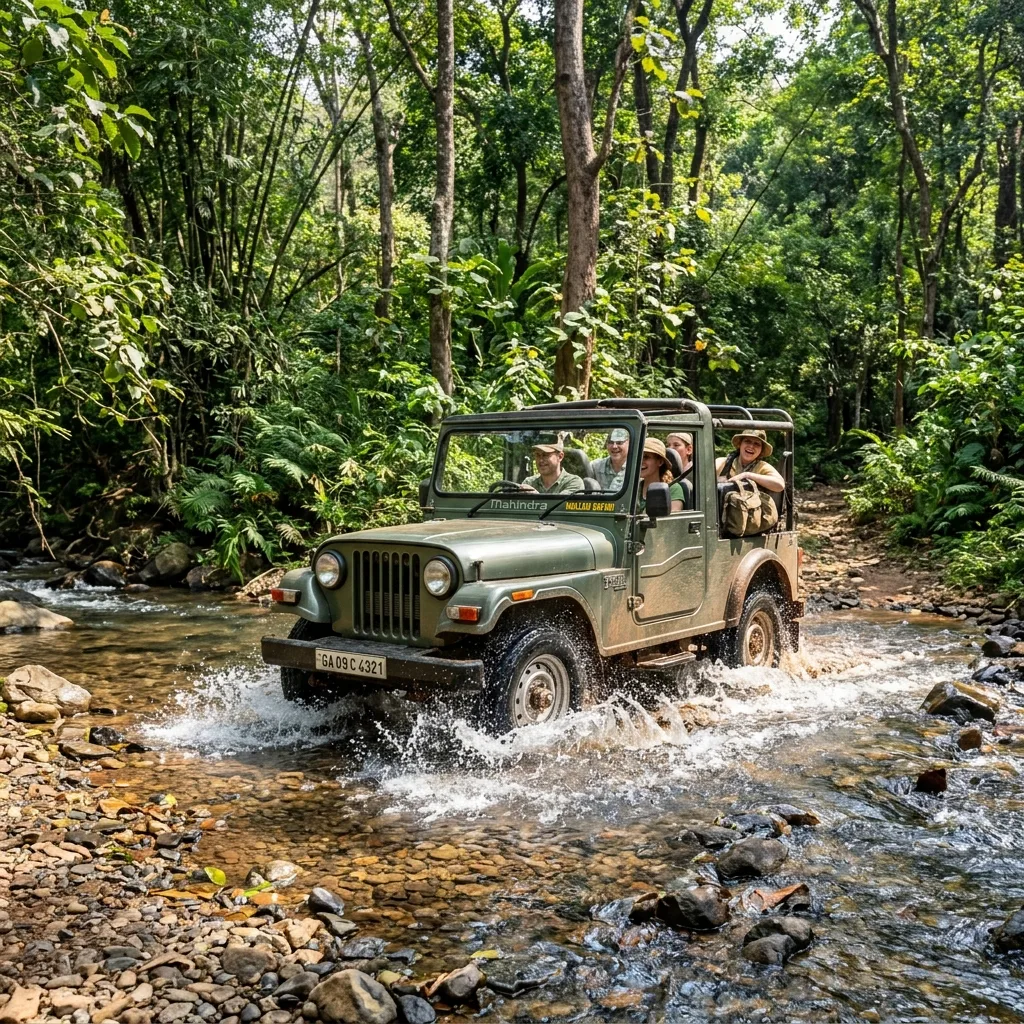 Authorised jeep safari vehicles navigate river streams and rough jungle paths
After arriving at the authorised entry point, visitors board government-approved or authorised shared jeeps that travel along forest tracks towards the waterfall. The route passes through dense greenery, uneven trails, shallow stream crossings, and stretches of road that are inaccessible to regular cars. Depending on the season, those water crossings can range from small puddles in winter to flowing streams after the monsoon, making every trip feel a little different.
The ride itself is fairly short, but don't expect a luxury safari. These are practical vehicles designed for rough terrain rather than comfort. The roads can be bumpy, particularly after heavy rainfall, so it's worth holding onto your belongings and wearing clothing that you don't mind getting a little dusty or damp.
One thing that often surprises first-time visitors is that the jeep doesn't stop directly beside the waterfall. After the ride, you'll still need to walk the remaining distance to the main viewing area. The walk is manageable for most people, but comfortable footwear makes the experience much easier, especially if the ground is wet.
Another question travellers frequently ask is whether they should book the jeep safari in advance. In most cases, advance booking isn't necessary for individual travellers during regular weekdays, although this can vary depending on the season and current forest department procedures. During long weekends, public holidays, Christmas, New Year, and other peak travel periods, visitor numbers increase significantly, which can lead to queues and longer waiting times before boarding a jeep.
That's why arriving early in the morning is usually the best strategy. Not only do you avoid some of the crowds, but you'll also have more time to enjoy the waterfall before the busiest part of the day begins.
Can You Trek to Dudhsagar Falls?
If you started researching Dudhsagar Falls a few years ago, there's a good chance you've come across articles or videos showing travellers walking along the famous railway tracks to reach the waterfall. For a long time, this was one of the most talked-about ways to visit Dudhsagar and was often described as an adventure in itself.
Today, however, that information is largely outdated.
Over the years, railway safety measures and forest regulations have changed significantly. The old railway-track trek that many blogs still mention is no longer a recommended or officially permitted route for tourists. Walking along active railway lines is both unsafe and restricted, which is why relying on older travel content can lead to unnecessary confusion.
That doesn't mean trekking around Dudhsagar has disappeared altogether. Depending on the season and permissions issued by the Forest Department, there are occasionally organised trekking opportunities through designated forest trails. These are very different from the older railway route and are usually conducted under specific guidelines, often during limited periods of the year. Availability can change from one season to another, so it's worth checking the latest local updates if trekking is the main reason for your visit.
For most visitors, though, trekking isn't the practical choice. Even when forest trails are open, they demand a reasonable level of fitness. The terrain can be uneven, sections may become slippery after rainfall, and Goa's humidity can make the walk feel far more strenuous than the distance suggests. Carrying enough water, wearing proper hiking shoes, and starting early in the day become much more important than many first-time trekkers expect.
What Is Dudhsagar Falls Actually Like?
If you've only seen Dudhsagar Falls through drone footage or perfectly edited Instagram reels, it's easy to imagine an isolated waterfall hidden deep inside the forest with hardly anyone around. The reality is a little different - and knowing that beforehand will help you appreciate the experience much more.
The first thing you'll notice is the sheer scale of the waterfall. Dudhsagar is one of the tallest waterfalls in India, cascading down four distinct tiers from a height of over 300 metres. During and immediately after the monsoon, the volume of water is immense, creating a powerful white curtain that can be seen from quite a distance. It's this dramatic appearance that gave the waterfall its name, which translates to "Sea of Milk."
Standing in front of it, photographs rarely do justice to just how massive it feels. The sound of the water crashing onto the rocks below, combined with the surrounding forest, creates an atmosphere that's very different from Goa's beaches. It's one of those places where most visitors instinctively pause for a few moments before reaching for their cameras.
At the same time, it's important to remember that Dudhsagar is one of Goa's most popular attractions. During the peak tourist season, especially between November and February, you should expect a steady stream of visitors arriving throughout the morning. Shared jeeps continue bringing new groups, and the main viewing area can become busy, particularly on weekends and public holidays.
Can You Swim at Dudhsagar Falls?
One of the questions almost every traveller asks before visiting Dudhsagar Falls is whether swimming is allowed. The answer is yes, but only in designated areas and only when conditions are considered safe.
At the base of the waterfall, there's a natural pool where visitors are sometimes permitted to enter the water. During the tourist season, you'll often see people wading into the shallower sections, cooling off after the jeep ride, or simply enjoying the experience of being close to one of India's tallest waterfalls.
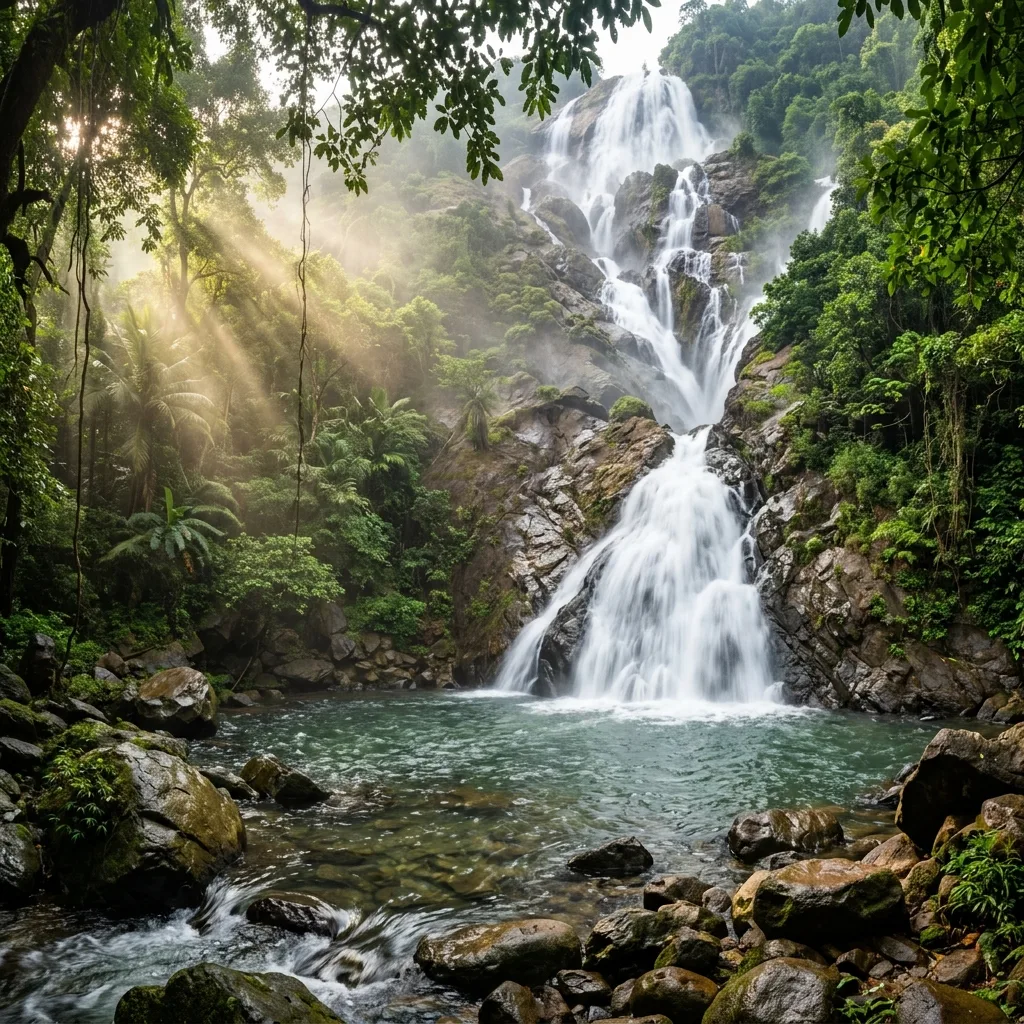 The misty pool at the base of the waterfall is surrounded by natural forest boulders
That said, it's important to understand that conditions at Dudhsagar change dramatically throughout the year. During or immediately after the monsoon, the waterfall carries an enormous volume of water. The currents become significantly stronger, water levels rise quickly, and swimming may be restricted or discouraged altogether. Even outside the monsoon season, the force of the waterfall itself can be deceptive, so visitors should avoid venturing too close to the main cascade.
The safest approach is to follow instructions from forest officials and any authorised staff present at the site. If certain sections are closed or visitors are being advised to stay out of the water, those restrictions are usually based on current conditions rather than routine rules.
Families travelling with children should be particularly cautious. While children can certainly enjoy the visit, they should remain under close supervision near the water, especially on slippery rocks or uneven surfaces. The rocks around the pool can become smooth from constant flowing water, making them more slippery than they appear.
Best Time to Visit Dudhsagar Falls
Dudhsagar Falls can be visited for much of the year, but the experience varies considerably depending on the season. Choosing the right time isn't just about the weather - it also affects water flow, accessibility, crowd levels, and even whether certain activities are available.
For most travellers, the best overall time to visit is between October and February. During these months, the waterfall still carries a healthy flow from the monsoon, temperatures are much more comfortable, and road conditions are generally at their best. Jeep safaris operate regularly, the forests remain lush and green, and the weather is ideal for spending several hours outdoors.
March to May brings warmer temperatures across Goa. Dudhsagar remains accessible, but afternoons can become quite hot and humid, making early morning departures the better choice. While the waterfall continues to flow, the volume of water gradually reduces compared to the months immediately after the monsoon.
The monsoon season, usually from June through September, transforms Dudhsagar into its most dramatic form. The waterfall becomes incredibly powerful, creating spectacular views that attract photographers from across the country. However, this is also the season when access becomes less predictable. Heavy rainfall, overflowing streams, forest regulations, and safety restrictions can affect jeep safari operations and visitor access. If your primary goal is simply to witness Dudhsagar at its most powerful, the monsoon is unforgettable. If you're looking for the smoothest overall travel experience, the months immediately after the rains are usually a better choice.
What Should You Carry for a Trip to Dudhsagar Falls?
Packing for Dudhsagar Falls is a little different from packing for a day at the beach. Since you'll be spending time inside a protected forest area, walking on uneven ground, and potentially getting wet from the waterfall's mist, carrying the right essentials can make your visit much more comfortable:
- Comfortable footwear: Wear sturdy walking shoes or sandals with proper grip. Flip-flops are highly slippery on wet boulders.
- Waterproof bags: Protect cameras, phones, and wallets from the heavy mist spray near the viewpoints.
- Hydration: A reusable water bottle is key since local shops aren't present inside the forest sanctuary.
- Change of clothes & towel: If you decide to take a dip in the designated pool sections.
- Mosquito repellent: Highly recommended inside the deep jungle, especially during post-monsoon months.
- Cash: Forest checkposts, local guides, and parking spots often have poor cell signal for digital wallets.
Common Mistakes to Avoid
Dudhsagar Falls isn't a difficult place to visit, but a few common mistakes can make the experience far less enjoyable than it should be. Fortunately, they're all easy to avoid with a little planning:
- Arriving too late: Departing after breakfast often means long safari queues and heavy crowd densities. Start early!
- Relying on outdated railway trek guides: Walking along active train tracks is illegal, highly dangerous, and heavily fined.
- Rushing the day: Trying to combine Dudhsagar with multiple other far-flung activities makes the itinerary extremely tiring. Focus on Dudhsagar first, then reward yourself with a slow evening back on the coast.
Frequently Asked Questions
Final Thoughts
Dudhsagar Falls is one of those places that lives up to its reputation - as long as you arrive with the right expectations. It's not an attraction you'll casually stop by for half an hour, nor is it a secluded secret known only to locals. Instead, it's a well-loved destination that combines spectacular scenery with a memorable journey through Goa's forests.
Planning ahead makes all the difference. Starting early, choosing the right season, understanding how transport works, and treating Dudhsagar as a dedicated day trip will help you enjoy the experience far more than trying to fit it into an already packed itinerary.
One of the biggest advantages of staying in South Goa is that you don't have to choose between beaches and nature. You can spend one day exploring Dudhsagar Falls, another relaxing at Palolem or Agonda, and another discovering places like Butterfly Beach, Cola Beach, or Galgibaga without constantly changing accommodation.
If you're planning a longer Goa holiday, booking a stay in South Goa through Wayzyy gives you the flexibility to experience both sides of the state. From private villas and apartments to locally hosted vacation rentals, you'll have an ideal base for exploring everything from quiet beaches and coastal villages to waterfalls, wildlife sanctuaries, and some of Goa's most memorable natural attractions.
Whether Dudhsagar is your first stop or the highlight of your trip, it's a destination that reminds you there's much more to Goa than just its beaches. With a little planning and realistic expectations, it's likely to become one of the most rewarding days of your entire journey.
Want to list your villa on Wayzyy?
Email us at hello@wayzyy.com - Wayzyy is launching soon in Goa.