
North Goa vs South Goa - Which Part Is Actually Right for Your Trip?
First time visiting Goa or coming back for a workation? Here is the honest breakdown of the vibe, villages, and seasonal differences between North and South Goa.
Published 6 July 2026
The Short Answer
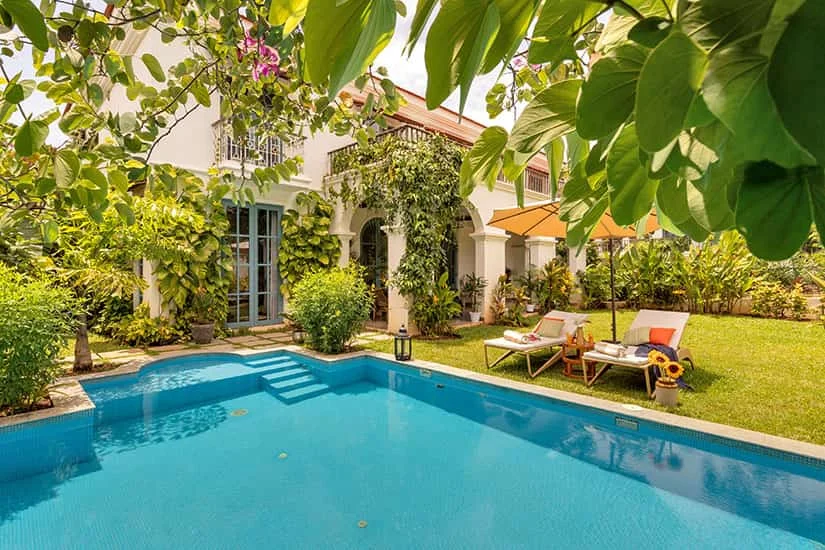
If you're visiting Goa for the first time, travelling with friends, or looking for cafés, beach clubs, nightlife and plenty of places to explore without driving too far every day, North Goa will probably suit you better.
If your trip is more about slowing down, spending time with family, taking long walks on quieter beaches or simply switching off for a few days, South Goa is usually the direction people end up enjoying more.
Most articles stop there, but that answer doesn't really help once you start planning your trip.
Goa has changed quite a bit over the last few years. People don't really choose between North Goa and South Goa anymore; they choose between Assagao and Candolim, between Palolem and Agonda, between Siolim and Vagator. That's usually where the experience changes.
Spend a few days in Assagao and then drive to Baga in the evening. Technically you're still in North Goa, but it feels like you've entered a completely different place. The same happens in South Goa. Someone staying in Palolem is likely to describe their holiday very differently from someone staying in Colva, even though both would tell you they spent the week in South Goa.
After speaking to hosts, property managers and travellers while working on Wayzyy's Goa guides, one pattern kept coming up. First-time visitors usually start by asking whether they should stay in North Goa or South Goa. People who've been coming back for years ask a different question altogether. They already know which villages they like, which cafés they'll spend their mornings in and which beach they'll head to before sunset.
One villa owner in Siolim smiled when we asked him how guests normally decide where to stay.
"People booking their first Goa trip ask for North Goa. People coming back ask for a particular village."
That stayed with us because it's probably the simplest way to explain Goa today.
The question isn't really whether North Goa is better than South Goa or the other way around. It's whether you're looking for busy cafés or quiet mornings, lively beaches or empty stretches of sand, places where every evening turns into a night out or places where dinner by the sea is the plan.
That's why this guide isn't going to tell you that one side of Goa is better than the other. Instead, we'll walk through the villages people actually stay in, what each of them feels like, and the kind of traveller who usually ends up loving them. By the end, choosing where to stay should feel a lot easier than simply picking a side of the map.
North Goa Isn't One Place. It's Half a Dozen Different Holidays.
If you've never been to Goa before, it's easy to imagine North Goa as one big destination.
That's usually because most Instagram reels, YouTube vlogs and travel itineraries only show one side of it. Beach clubs, cafés overlooking the sea, scooters parked outside brunch spots and streets filled with people late into the evening have almost become the default image of North Goa.
Spend a few days here, though, and that image starts to change.
North Goa isn't one destination with different beaches. It's a collection of villages that have gradually developed their own personalities over the years. That's probably why two people can come back from North Goa with completely different opinions about the trip. One spent the week hopping between beach clubs in Vagator, while the other barely left the quiet lanes of Assagao except to grab breakfast and head to the beach.
Neither of them is wrong.
They simply experienced different versions of North Goa.
One property manager we spoke to while researching this guide laughed when we asked where guests usually wanted to stay.
"Everyone asks for North Goa. Five minutes later they're actually describing Assagao."
That happens more often than you'd think.
People don't usually realise they're searching for a village rather than a region. They'll say they want cafés within walking distance, quieter evenings, somewhere they can work remotely during the day, or a villa close enough to Vagator without being in the middle of the crowds. Without realising it, they've already described a particular part of North Goa.
That's also why choosing the right village matters far more than simply choosing North Goa itself.
Take Assagao, for example (which we explore in-depth in our dedicated Assagao Villas Guide).
Over the last few years, it's quietly become one of the most talked-about villages in Goa. Mornings here usually begin with cafés filling up long before the beaches do. The roads are lined with restored Portuguese homes, independent restaurants, design stores and villas tucked away behind greenery. You're only a short drive from Vagator and Anjuna, but the pace feels completely different. It attracts people who enjoy Goa as much for its food, cafés and slower mornings as they do for its beaches.
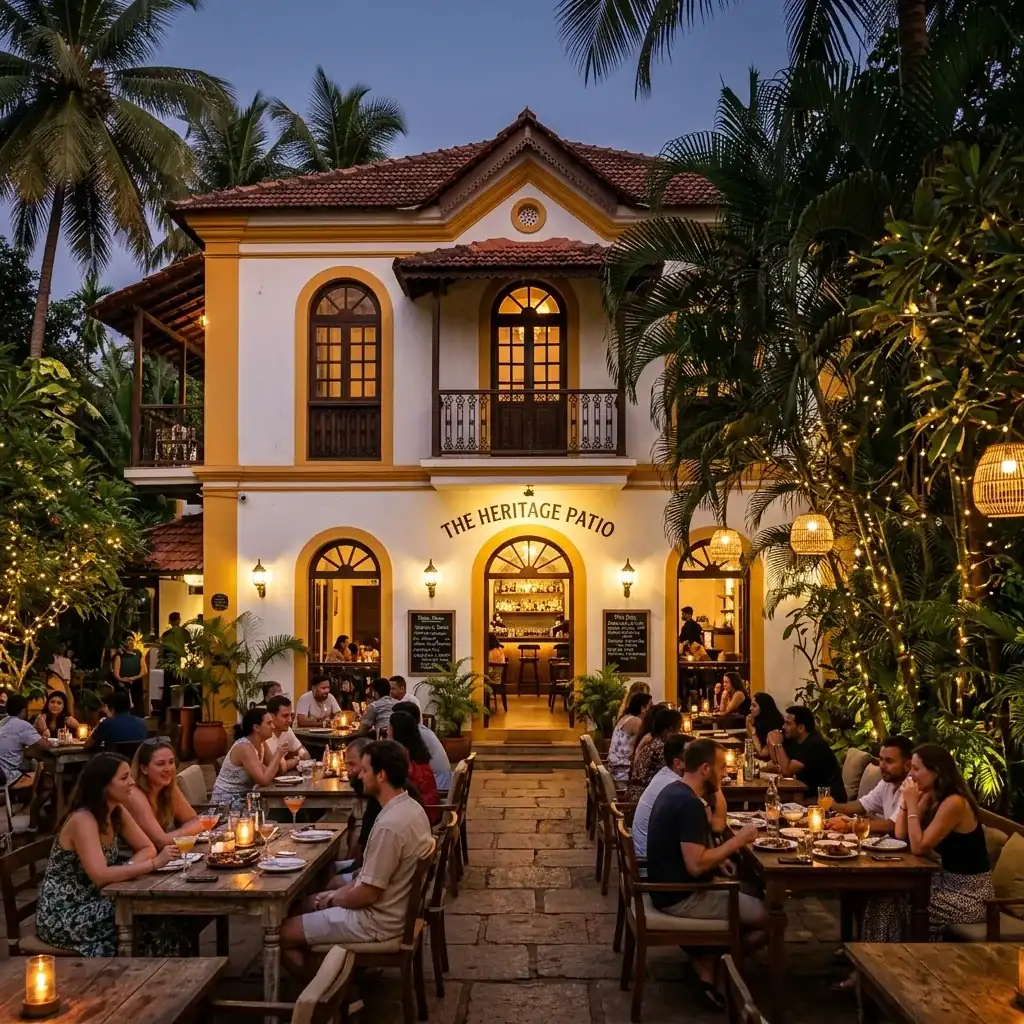
Siolim offers another version of North Goa altogether (which we cover in our Siolim Villas Guide).
It's become a favourite among people staying for longer than a weekend. Remote workers, families and travellers returning for their second or third Goa trip often end up here because it sits comfortably between some of North Goa's busiest beaches without feeling busy itself. You can reach Morjim, Ashwem (covered in our Ashwem Beach Guide) or Vagator fairly easily, but by evening you're back in a neighbourhood that still feels residential rather than touristy.
Move a little closer towards Vagator (which we cover in our Vagator Beach Guide) and Anjuna (which we cover in our Anjuna Beach Guide), and the atmosphere changes again.
This is where North Goa becomes the version most people recognise. Beach clubs, music venues, sunset spots and cafés all sit within a relatively small area, making it one of the easiest places to stay if you like having plenty of options without driving too much. It's energetic without necessarily feeling overwhelming, especially if you're visiting outside the busiest holiday weeks.
Candolim has its own rhythm too.
For many first-time visitors, it strikes a comfortable balance between convenience and familiarity. There are plenty of hotels, villas, restaurants and shops nearby, making it one of the easiest places to base yourself if you're travelling with family or simply don't want to spend your holiday figuring out logistics.
Head further north towards Morjim (which we cover in our Morjim Beach Guide) or Mandrem (which we cover in our Mandrem Beach Guide), and the pace changes once again.
The beaches become quieter, mornings stretch a little longer and the crowds start thinning out. It's still North Goa, but it feels much calmer than the beach belts most people associate with the region. You'll find plenty of people here who aren't trying to squeeze ten attractions into a single day. They're happy spending the afternoon by the beach, reading a book or working from a café before calling it a day.
That's probably the biggest misconception about North Goa.
People often describe it as loud, crowded and built entirely around nightlife.
Parts of it certainly are.
But that's only one version of North Goa.
Spend enough time exploring beyond the obvious places and you'll realise that North Goa has quietly become one of the most diverse parts of the state. Whether you're travelling for cafés, food, beaches, workations, family holidays or a weekend with friends, there's usually a village that feels like it was made for exactly that kind of trip.
South Goa Isn't Slower Because There's Less to Do. It's Slower Because That's Why People Go There.
One of the biggest misconceptions about South Goa is that there's "nothing to do."
You'll hear that quite a bit from people who've only spent a weekend around Baga or Vagator. The assumption is simple: North Goa is where everything happens, while South Goa is where people go once they've "seen Goa."
Spend a few days there, and that idea disappears pretty quickly.
South Goa hasn't grown around nightlife in the same way North Goa has. It has grown around space. Wider beaches, quieter roads, smaller cafés and villages where life still moves at its own pace. You don't feel the need to tick places off a checklist because the experience isn't built around constantly moving from one attraction to the next.
That's exactly why so many people who've visited Goa a few times eventually find themselves heading south.
One host near Agonda told us something that stayed with us while researching this guide.
"People usually discover South Goa by accident. They come looking for a quieter beach and end up changing how they travel altogether."
That probably explains South Goa better than any travel brochure.
Palolem is often where that journey begins.
It's one of the livelier parts of South Goa, but "lively" here means something very different from North Goa. The beach is lined with cafés, small restaurants and beach huts instead of large beach clubs, and evenings usually end with people sitting by the water rather than rushing towards the next venue. If it's your first visit to South Goa, Palolem feels like an easy introduction because it offers a little bit of everything without feeling overwhelming.
A short drive away, Agonda feels noticeably different.
People often compare the two because they're so close to each other, but they attract completely different travellers. Agonda is where you'll find couples looking for a quieter escape, people carrying books instead of party itineraries and remote workers who've come to Goa for a few weeks rather than a long weekend. The beach itself feels less commercial, and that's exactly what many visitors appreciate about it.

Further north, villages like Colva and Benaulim have a different rhythm again.
They're among the more established parts of South Goa, making them popular with families, especially those who prefer easy access to restaurants, local markets and longer beachfront walks without moving too far away from everyday conveniences. They're not trying to compete with North Goa's nightlife, and they don't need to. Their appeal comes from offering a holiday that feels comfortable, familiar and noticeably less rushed.
If you're looking for something even quieter, places like Patnem and Cavelossim deserve far more attention than they usually get.
Patnem sits just beyond Palolem and has quietly become a favourite for travellers who enjoy yoga retreats, wellness stays and slower mornings by the sea. Cavelossim, on the other hand, offers a more polished resort atmosphere, with wider beaches, luxury properties and plenty of space to simply unwind. Neither tries to be the centre of Goa's social scene, and that's exactly what makes them memorable.
That's probably the biggest difference between North and South Goa.
North often encourages you to go out and discover what's happening.
South quietly invites you to slow down and notice what's already around you.
Neither approach is better.
They're simply built for different kinds of holidays.
If your perfect day starts with planning which cafés, beaches and restaurants you'll visit before sunset, you'll probably feel more at home in North Goa. If your idea of a great holiday is finishing breakfast without checking the time, walking along an almost empty beach and ending the day watching the sun disappear into the Arabian Sea, South Goa has a way of making that feel completely natural.
And that's why choosing between North and South isn't really about choosing a destination.
It's about choosing the pace at which you want to experience it.
Which Part of Goa Is Actually Right for Your Trip?
By this point you've probably realised there isn't a simple winner.
North Goa isn't "better."
South Goa isn't "better."
The better question is whether one of them feels more like the holiday you're trying to have.
That's usually where the answer becomes much easier.
If It's Your First Trip to Goa
If you've never been to Goa before, North Goa is usually the easier recommendation.
Not because South Goa isn't worth visiting, but because North Goa gives you a little bit of everything. You can spend your morning at a café in Assagao, drive to Vagator for sunset, explore Anjuna's markets, have dinner in Candolim and still be back at your villa without spending hours on the road.
There's simply more variety packed into a smaller area.
That's helpful when you're still figuring out what kind of Goa you enjoy.
Most people who fall in love with South Goa usually discover it on their second or third visit, after they've already experienced the busier side of the state.
If You're Travelling as a Couple
This is probably the easiest recommendation to make.
If your idea of a holiday is slow breakfasts, long walks on the beach and not feeling like you have to be somewhere every hour, South Goa usually wins.
Places like Agonda, Patnem and parts of Palolem naturally lend themselves to that kind of trip. The pace is slower, the beaches feel more open and evenings tend to revolve around good food and conversations rather than deciding which place to visit next.
That's not to say North Goa can't be romantic.
Assagao, Siolim and Mandrem have some beautiful boutique villas that are perfect for couples who enjoy cafés, good restaurants and exploring during the day before returning somewhere quiet in the evening.
It really comes down to whether your holiday is built around exploring or unwinding.
If You're Travelling With Family
Families usually value convenience more than anything else.
Being close to restaurants, having supermarkets nearby, easy road access and beaches that aren't overcrowded often matter much more than nightlife.
That's why Candolim continues to be a popular choice for first-time family trips. In South Goa, Colva, Benaulim and Cavelossim are equally good options if your priority is a quieter holiday with fewer crowds.
One host we spoke to mentioned something that made perfect sense.
"Families don't ask where the parties are. They ask where they can get groceries after 9 PM."
It's a small detail, but it says a lot about how differently people plan their trips.
If You're Planning a Trip With Friends
This is where North Goa naturally shines.
Whether it's a birthday celebration, a reunion or simply a long weekend away, staying somewhere around Vagator, Anjuna or nearby villages means you won't have to travel far between cafés, beaches, nightlife and your villa.
That's one reason larger villas in North Goa tend to get booked quickly during long weekends and the December season.
You have more options throughout the day without spending half your holiday driving between places.
If You're Coming to Goa for a Workation
Goa has quietly become one of India's favourite workation destinations.
Spend enough time in cafés around Assagao or Siolim and you'll notice laptops are almost as common as surfboards.
People aren't just coming here for three-day holidays anymore. They're staying for two weeks, sometimes a month, working during the day and heading to the beach once meetings are over.
For that kind of trip, North Goa generally offers more flexibility.
Assagao, Siolim and Mandrem have built communities around cafés, co-working spaces and long-term stays, making them a comfortable choice if you're balancing work with travel.
That said, South Goa has its own audience too.
If your work doesn't require cafés every afternoon and you're simply looking for somewhere peaceful with reliable internet, villages around Agonda and Palolem can be equally rewarding.
The experience is just very different.
If Your Holiday Is Simply About Slowing Down
Sometimes the destination isn't really the point.
You're not trying to visit every beach.
You're not trying to tick restaurants off a list.
You just want a few days away from notifications, traffic and packed schedules.
That's probably when South Goa feels most rewarding.
It's difficult to explain until you've spent a morning there, but the pace genuinely changes. Breakfast turns into lunch without anyone checking the time. Beaches feel less hurried. Even the drives between villages become part of the holiday rather than simply getting from one place to another.
For some people, that's exactly what they picture when they think about Goa.
For others, it feels too quiet.
Neither reaction is wrong.
That's why this article doesn't try to convince you that one side is objectively better than the other.
The best part of Goa is usually the one that matches the holiday you wanted in the first place.
Never forget the Seasonal Difference
One thing we noticed while speaking to hosts across Goa is that they almost never describe the year as "summer," "monsoon" or "winter."
Instead, they'll say things like, "December is when everything fills up," or "July is when Goa starts feeling like home again."
That probably tells you more about Goa than any weather forecast ever could.
The state changes a lot throughout the year, and not just because of the weather. The crowds change, the kind of traveller visiting changes, and even the villages themselves feel completely different depending on when you arrive.
Take North Goa during the last two weeks of December.
Places like Vagator, Anjuna and Candolim are buzzing from morning until late at night. Cafés that usually have plenty of seating suddenly have waiting lists, villas get booked months in advance, beach clubs are packed and traffic becomes part of the holiday experience whether you like it or not. If you're visiting for Christmas or New Year's with a group of friends, that's probably exactly the atmosphere you're hoping for.
Visit those same places in October or February, though, and you'll have a very different experience.
The cafés are still open, the beaches are far less crowded and getting a table for breakfast doesn't require planning your morning around it. Many travellers who've been coming to Goa for years actually prefer these months because you still get great weather without feeling like you're sharing every beach with thousands of other people.
One villa host in Assagao laughed when we asked him about the "best" time to visit Goa.
"Everyone wants December until they actually experience December traffic."
That doesn't mean December is a bad time to visit.
Far from it.
If your idea of Goa includes festivals, beach parties, live music and a lot happening every evening, there's no better time to be here. It's simply worth knowing that you'll be sharing that experience with a lot of other travellers.
South Goa follows a slightly different rhythm.
Even during peak season, beaches like Agonda, Patnem and stretches around Benaulim usually feel calmer than the busiest parts of North Goa. You'll certainly notice more visitors between November and January, but the experience rarely feels as intense as some of the popular beach belts further north.
The biggest surprise for many people is the monsoon.
For years, Goa was treated almost like a seasonal destination where everything stopped once the rains arrived. That picture has changed quite a bit. Monsoon has quietly become one of the most underrated times to visit, especially if your trip isn't centred around beach hopping (see our guide on the best time to visit Goa for a full seasonal breakdown).
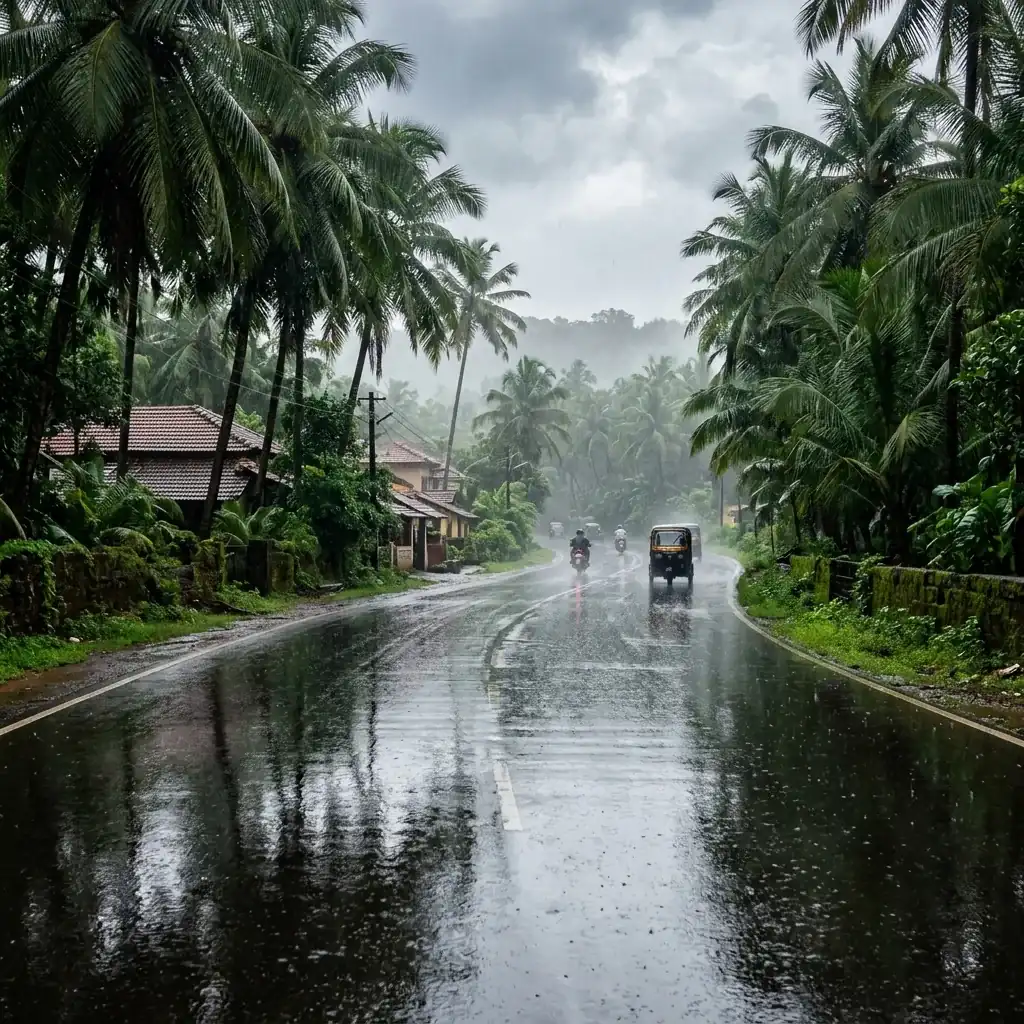
The landscape turns an entirely different shade of green, rivers fill up, cafés become quieter and villas that might be difficult to book during peak season suddenly become much more accessible. If you're planning a workation, writing retreat or simply a slower holiday, the monsoon months can feel surprisingly rewarding.
Of course, there are trade-offs.
The sea is often rough, many water sports pause for the season and beach shacks operate on reduced schedules or close temporarily. If your Goa itinerary revolves around parasailing, jet skiing and spending every afternoon on the beach, December will probably suit you much better.
If you're travelling to slow down rather than rush through a checklist, you might find yourself enjoying Goa at a completely different time of the year.
That's why there isn't really a single "best" month to visit Goa.
There's only the month that matches the holiday you're trying to have.
Someone looking for New Year's celebrations will probably have a completely different answer from someone planning a month-long workation. A family travelling during school holidays has different priorities from a couple looking for quiet beaches. The season changes the experience just as much as the location does.
It's another reminder that choosing where to stay in Goa isn't only about deciding between North and South.
It's also about deciding when you want to experience them.
Maybe That's Why People Keep Coming Back to Goa
After spending weeks researching this guide, speaking to hosts, property managers and people who've made Goa their second home, one thing became pretty clear.
Most people don't return to Goa because they haven't seen enough of it.
They come back because every trip feels a little different.
You might spend your first visit chasing sunsets in Vagator, your second discovering cafés tucked away in Assagao, and a few years later find yourself booking a month-long stay somewhere around Agonda because you wanted a quieter pace for a while.
That's the nice thing about Goa.
It never asks you to experience it in one particular way.
Some people come here for New Year's celebrations. Others arrive during the monsoon when everything slows down and the rain becomes part of the experience. There are people who work remotely from cafés for a month, families who return every December to the same villa, and couples who simply want a few days where nobody's in a hurry.
Goa somehow makes room for all of them.
Maybe that's why it's never really felt like just another holiday destination.
For a lot of people, it's the place where they finally switch off. They stop looking at the time, stop rushing from one attraction to the next and stop feeling like every day needs a plan.
Sometimes the best part of the trip is sitting outside your villa with a cup of coffee, hearing the waves in the distance and realising you haven't checked your phone for an hour.
That's difficult to describe on a map.
It's even harder to capture in a travel itinerary.
And that's probably why no article - including this one - can tell you exactly which part of Goa you'll fall in love with.
The only thing we can do is help you find the version of Goa that feels most like you.
The rest usually happens on its own.
One Last Tip Before You Book
By now you've probably realised there isn't a universal answer to the "North Goa or South Goa?" debate.
The right location depends on the kind of holiday you're planning, the people you're travelling with and even the time of year you decide to visit. That's why experienced travellers rarely book the first place they come across anymore. They compare locations, they compare reviews and, increasingly, they compare booking platforms too.
If you're planning to stay in a villa, it's worth opening a couple of different websites before making the final payment. The same property can sometimes appear at different prices depending on where it's listed, simply because every platform follows a different business model. We covered exactly how that works in our detailed breakdown of why the same villa in Goa can cost different prices on different booking platforms, where we explain how commissions, pricing models and platform fees influence what guests eventually pay.
If your priority is finding the most affordable option, it's also worth looking beyond the platforms everyone already knows. Newer Goa-focused marketplaces such as Wayzyy are taking a different approach by using a credit-based system for hosts instead of charging a commission on every booking. Rather than taking a percentage from each reservation, hosts simply recharge credits as they receive bookings. The idea is straightforward: if hosts aren't constantly pricing around another platform commission, they have greater flexibility in what they charge guests.
That doesn't mean every property will automatically be cheaper, and it certainly isn't the only thing you should compare before booking. Reviews, host responsiveness, cancellation policies and the location itself matter just as much. But if you're already comparing prices across multiple websites - which most experienced travellers do anyway - it makes sense to include a Goa-first platform in that comparison as well.
We also put together a detailed guide comparing Airbnb, Booking.com, StayVista, SaffronStays, Wayzyy and other booking platforms, including where each one works best and how their pricing models differ. If you're still deciding where to book, it's a good companion to this guide before you make your final decision.
At the end of the day, the platform should simply help you get to the holiday you're looking forward to.
The real memories usually begin after you've checked in.
Frequently Asked Questions
Want to list your villa on Wayzyy?
Email us at hello@wayzyy.com - Wayzyy is launching soon in Goa.