
Kakolem Beach Goa (Tiger Beach): The Complete Travel Guide (2026)
Planning a trip to Kakolem Beach (Tiger Beach) in South Goa? Read our complete, honest travel guide to the cliff staircase, freshwater stream, swimming conditions, and nearby stays.
Published 18 August 2026
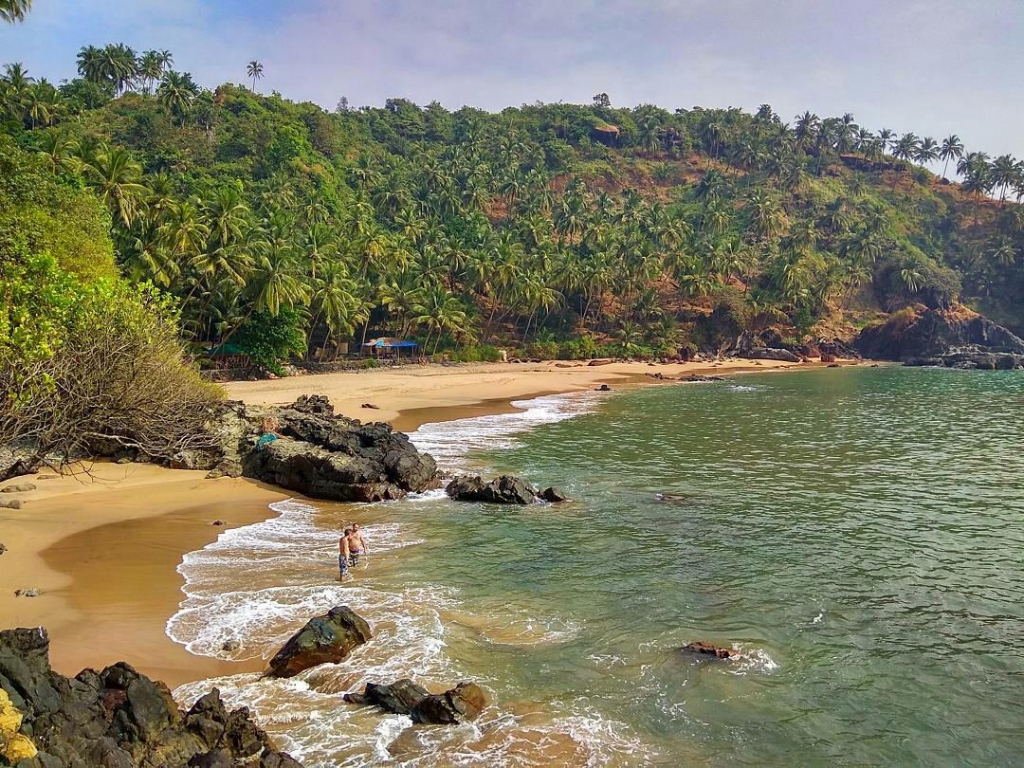
Most people visit Goa expecting lively beaches, beach shacks playing music until sunset, and long stretches of coastline filled with cafés, water sports, and crowds. That's certainly one side of Goa, but it isn't the whole story.
Hidden along the cliffs of South Goa is a beach that feels almost disconnected from everything the state is famous for. Reaching it requires a little effort, there are very few facilities once you arrive, and depending on when you visit, you may find yourself sharing the shoreline with only a handful of people.
That's Kakolem Beach, more commonly known as Tiger Beach.
Tucked away between Cabo de Rama and Agonda, Kakolem has built a reputation as one of Goa's last truly secluded beaches. Calling it a "secret beach" today would probably be an exaggeration - social media has made sure of that - but it still attracts far fewer visitors than places like Palolem, Colva, or Baga. The reason is simple: you don't accidentally stumble upon Kakolem. You come here because you've deliberately chosen a quieter, less commercial side of Goa.
The first glimpse of the beach is enough to explain why it's become a favourite among photographers and nature lovers. From the viewpoint above, you can see a small crescent of golden sand tucked beneath towering laterite cliffs, framed by dense greenery on both sides. A freshwater stream flows down towards the sea, adding to the feeling that you've discovered a place that hasn't changed much over the years. It's one of the reasons Kakolem is consistently mentioned among Goa's most scenic hidden beaches.
That said, Kakolem isn't the kind of destination that appeals to everyone.
If your perfect beach day involves hopping between cafés, trying water sports, or spending the afternoon at a lively beach club, you'll probably enjoy Palolem or Morjim more. Kakolem offers something entirely different. There are no rows of restaurants overlooking the shore, no bustling markets nearby, and no packed promenade buzzing with activity. What draws people here is the sense of isolation - a rare feeling in a destination as popular as Goa.
The trade-off, of course, is accessibility. Getting to the beach involves walking down a steep staircase carved into the hillside and climbing back up when you're ready to leave. There are limited facilities, very little shade during the afternoon, and swimming isn't always advisable depending on sea conditions. Those who arrive expecting a fully developed tourist beach are often surprised.
For everyone else, that's precisely the appeal.
Kakolem rewards travellers who don't mind stepping a little off the beaten path. Instead of loud music and crowds, you'll find uninterrupted ocean views, dramatic cliffs, and a beach where the natural landscape remains the main attraction. It's the kind of place where you can spend an hour doing absolutely nothing except listening to the waves, and somehow leave feeling like you've experienced one of Goa's most memorable spots.
In this guide, we'll cover everything you need to know before visiting Kakolem Beach - from how to reach it and whether the climb is difficult to the best time to visit, swimming conditions, nearby attractions, and a few common mistakes that first-time visitors often make.
Where Is Kakolem Beach?
Kakolem Beach is located in South Goa, roughly midway between Cabo de Rama Fort and Agonda Beach. Although it's only a short drive from both, the beach feels surprisingly remote because it's hidden beneath steep cliffs and can't be seen from the main road. Unless you're specifically looking for it, it's easy to drive straight past the entrance.
The location makes Kakolem an excellent addition to a South Goa road trip. From Agonda, the drive takes around 20 minutes, while Palolem is approximately half an hour away. Visitors coming from Margao can usually reach the beach in under an hour, and it's about a 90-minute drive from Dabolim Airport, depending on traffic.
Many travellers make the mistake of visiting Kakolem as a standalone destination. A much better approach is to combine it with nearby attractions like Cabo de Rama Fort, Cola Beach, or Agonda Beach. Since all of these are within a relatively short driving distance, it's easy to build a relaxed full-day itinerary without spending most of your time on the road.
Planning your stay nearby? Get it up to 20% cheaper on Wayzyy
Statistically speaking, global booking platforms mark up rates by up to 20% to cover commissions and service fees. Because Wayzyy doesn't add any markup from our end, you get direct direct-from-host pricing for the same property.
Our team is working hard to get in front of your eyes. With over 500 properties and 50 hosts already onboarding, we are increasing the options before our launch so that we have choices for all your travel needs.
Why Is Kakolem Also Known as Tiger Beach?
One question almost everyone asks before visiting is why Kakolem is also called Tiger Beach.
Despite the name, there aren't - and never have been - tigers roaming the beach. The nickname is believed to have originated from local folklore rather than documented history. Some stories suggest the dense forests surrounding the cliffs reminded locals of tiger habitats, while others link the name to old legends that have been passed down through generations. There isn't any definitive explanation, but the name has remained popular enough that many travellers know the destination as Tiger Beach rather than Kakolem Beach.
Today, the two names are used interchangeably. Search for either one on Google Maps or in travel guides, and you'll end up at the same stretch of coastline.
Is Kakolem Beach Worth Visiting?
The answer depends entirely on what you're looking for.
If you're searching for a lively beach with plenty of restaurants, nightlife, and activities, Kakolem probably won't live up to your expectations. But if your idea of a great beach involves dramatic scenery, fewer people, and a landscape that still feels largely untouched, it's one of the most rewarding places to visit in South Goa.
The beach isn't famous because of luxury resorts or entertainment. People come here for the experience of discovering a quieter side of Goa - the steep walk down the cliffs, the first panoramic view from above, the stream flowing into the sea, and the sense of calm that's increasingly difficult to find on the state's more popular beaches.
It's not the easiest beach to reach, and that's exactly why it has managed to preserve much of its character. Sometimes the places that require a little more effort end up being the ones you remember the longest.
What Makes Kakolem Beach So Special?
At first glance, Kakolem Beach might seem like just another quiet beach in South Goa. After all, Goa has no shortage of beautiful coastlines. So what makes this one stand out?
The answer isn't any single attraction - it's the overall experience.
Unlike beaches that have gradually transformed into bustling tourist hubs, Kakolem has managed to retain a sense of wilderness that's becoming increasingly rare in Goa. There's no commercial strip running alongside the sand, no rows of beach clubs competing for attention, and no endless stream of tourists arriving every few minutes. Even during the peak season, the beach often feels surprisingly peaceful compared to better-known destinations.
A Beach Hidden Beneath the Cliffs
One of the first things you'll notice is the dramatic setting.
Kakolem is tucked beneath towering laterite cliffs covered in dense tropical vegetation, making it almost invisible until you're standing at the viewpoint above. From there, the beach unfolds below like a hidden cove, with golden sand stretching between rocky headlands and the Arabian Sea extending endlessly into the horizon.
The panoramic cliffside viewpoint overlooking Kakolem Beach
It's the kind of view that encourages you to stop for a few minutes before making your way down. Many visitors admit they spend as much time admiring the scenery from above as they do relaxing on the beach itself.
Unlike Palolem or Colva, where the coastline opens up gradually, Kakolem feels like it's been carved out of the cliffs, giving it a much more secluded character.
The Freshwater Stream Adds to the Charm
Another feature that makes Kakolem unique is the small freshwater stream that flows across the beach before meeting the sea.
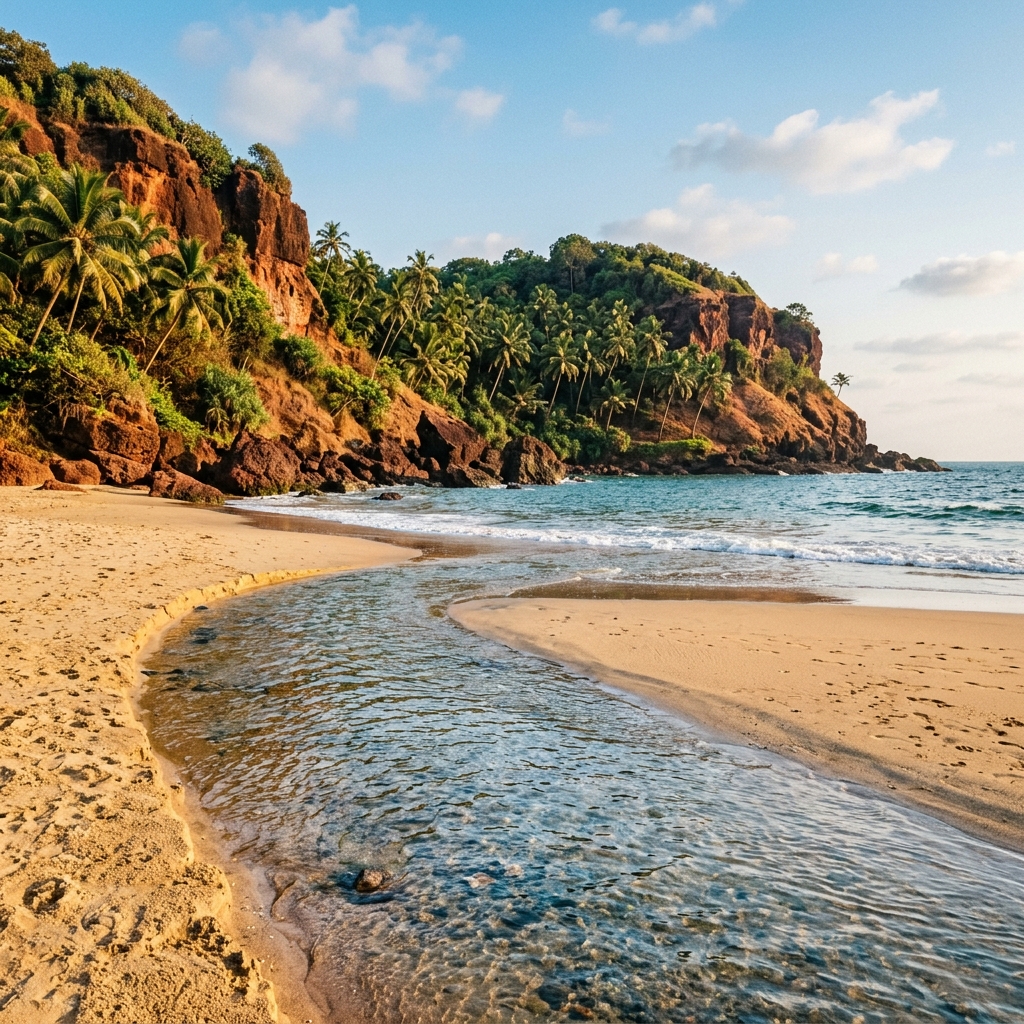
Freshwater stream meandering across the shoreline into the Arabian Sea
Depending on the season, the flow can vary considerably. After the monsoon, it's often much more noticeable, while during the summer months it becomes smaller. Although it isn't a major waterfall throughout the year, the stream adds a distinct charm to the landscape and creates one of Kakolem's most photographed scenes.
It's a reminder that this isn't just a beach - it's part of a much larger natural ecosystem where forests, cliffs, freshwater, and the ocean all come together in one place.
It Still Feels Untouched
Perhaps the biggest reason travellers fall in love with Kakolem is that it doesn't feel overly developed. Modern tourism has changed many parts of Goa over the past two decades. While that has brought better infrastructure and easier access, it has also transformed the atmosphere of several popular beaches.
Kakolem offers a glimpse of what Goa's coastline might have looked like before large-scale tourism became the norm. You'll find fewer signs, fewer permanent structures, and far less noise. The landscape itself remains the main attraction, and that's exactly how most visitors prefer it.
A Photographer's Dream
If you enjoy landscape photography, Kakolem is one of the most rewarding beaches in South Goa. The elevated viewpoint, rugged cliffs, winding staircase, and contrasting colours of the sea and surrounding greenery create plenty of opportunities for stunning photographs. Sunrise and late afternoon are particularly good times to visit, when the softer light brings out the textures of the cliffs and gives the water a deeper shade of blue.
It's Not About Activities - It's About Slowing Down
Visitors often ask what there is to do at Kakolem. The honest answer is - not much. And that's precisely why people come.
This isn't a destination for parasailing, jet skiing, or beach parties. Instead, it's a place to disconnect from busy itineraries, spend a few quiet hours by the sea, read a book under the shade of a tree, or simply listen to the waves without constant distractions.
Who Will Enjoy Kakolem the Most?
Kakolem isn't a beach that appeals to every traveller, but for the right kind of visitor, it can easily become one of the highlights of a Goa trip. You'll probably enjoy it if you:
- Prefer quieter beaches over crowded tourist hotspots.
- Enjoy nature, photography, and scenic viewpoints.
- Don't mind a short but steep walk to reach the beach.
- Like discovering places that feel a little off the beaten path.
- Want to experience a different side of Goa beyond its nightlife and beach clubs.
On the other hand, if you're travelling with elderly family members, very young children, or you're looking for restaurants, water sports, and plenty of facilities, you'll likely have a better experience at beaches like Palolem or Colva.
How to Reach Kakolem Beach Goa
One of the reasons Kakolem has managed to stay relatively untouched is that reaching it isn't quite as effortless as visiting Goa's more popular beaches. There's no bustling promenade leading straight to the shoreline, and you won't find a long row of cafés guiding you to the water. The journey requires a little planning, but that's also what keeps the crowds away.
Reaching Kakolem by Scooter or Car
For most travellers, renting a scooter is the easiest and most enjoyable way to explore South Goa. The roads leading towards Kakolem are generally in good condition, taking you through small villages, patches of forest, and stretches of coastline that are worth slowing down for.
If you're driving from Agonda, expect the journey to take around 20 minutes. From Palolem, it's usually between 30 and 40 minutes, while travellers coming from Margao can reach the beach in about 45 minutes, depending on traffic. As you get closer, Google Maps will guide you to a small parking area near the viewpoint. This is where the road ends.
The Famous Staircase
This is the part of the journey that catches many first-time visitors by surprise.
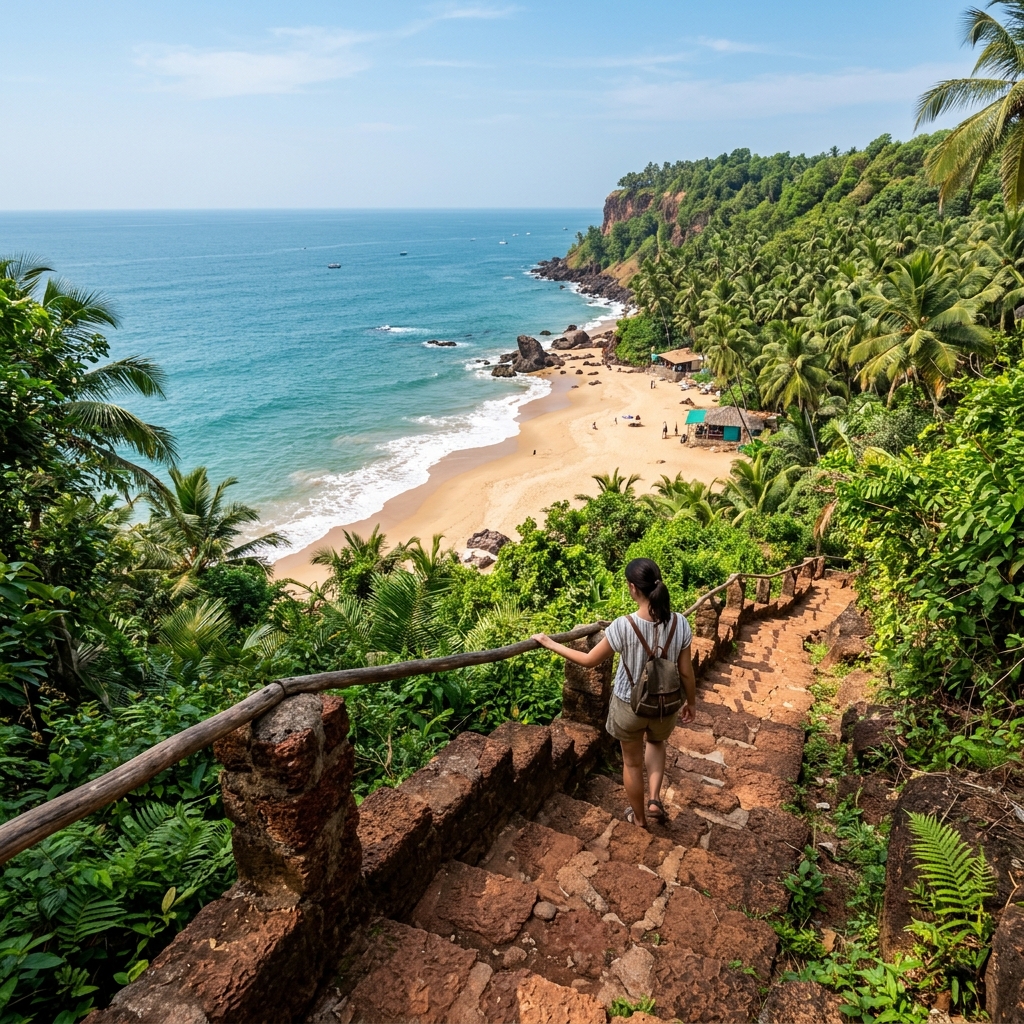
The steep laterite staircase carved into the hillside leading down to the beach
After parking your vehicle, you'll find a steep staircase carved into the hillside leading down to the beach. There are no roads that continue to the shoreline, so everyone has to complete the final stretch on foot.
The descent isn't particularly long, but it is fairly steep. Most reasonably fit travellers can reach the beach in around 10 to 15 minutes, taking a few short breaks if needed. The climb back up is naturally more demanding. On a hot afternoon, you'll definitely feel it. That's why many experienced visitors prefer arriving either early in the morning or later in the afternoon, when temperatures are much more comfortable.
Is the Trek Difficult?
Calling it a trek might be slightly misleading. This isn't a hiking trail through the forest or a challenging mountain climb - it's simply a steep walk down a series of steps. For most healthy adults, it's completely manageable.
However, it may not be suitable for:
- Elderly travellers with limited mobility.
- Visitors with knee or joint problems.
- Families carrying very young children.
- Anyone uncomfortable with steep staircases.
Wear the Right Footwear
One of the most common mistakes people make is arriving in slippery flip-flops. While they're fine for walking on the sand, they aren't ideal for the staircase, particularly if there's loose sand or the steps are damp. A pair of sandals with good grip or comfortable walking shoes will make the climb much easier.
Best Time to Visit Kakolem Beach
Kakolem Beach is one of those places where timing can completely change your experience. Visit on a cool winter morning, and you'll find calm weather, clear views, and a peaceful shoreline that feels almost untouched. Arrive on a humid afternoon in the middle of summer, and the climb back up the staircase can feel far more demanding than you expected.
October to March Is the Best Time to Visit
If you're planning your Goa trip specifically to explore Kakolem Beach, the months between October and March offer the best conditions. The weather is pleasant, humidity is lower than during summer, and the sea is generally calmer. The staircase leading to the beach is also much easier to navigate when it's dry.
Should You Visit During the Monsoon?
Probably not. Between June and September, South Goa receives heavy rainfall. While the cliffs become vibrant green and seasonal streams flow with greater force, the staircase can become slippery, sea conditions are unpredictable, and strong waves make swimming dangerous. Stopping at the viewpoint above can still be worthwhile, but spending several hours on the sand is best left for dry weather.
Can You Swim at Kakolem Beach?
The sea at Kakolem often appears calm from a distance, but unlike beaches such as Palolem, where lifeguards and gentle waters make swimming straightforward, Kakolem is a wild beach with no permanent lifeguard presence.
Waves can be stronger than they look, and submerged rocks in certain sections mean you should enter slowly and stay close to the shoreline. If the sea looks rough or waves are breaking aggressively, it's best to admire the view from the beach rather than swim.
Entry Fee, Timings & Facilities
- Entry Fee: Free. A small parking fee (₹20–₹50) may apply depending on local vendors.
- Timings: Open all day, but best visited between 8:00 AM and 5:00 PM for safety on the staircase.
- Facilities: Extremely limited. No commercial beach shacks, public washrooms, or changing rooms. Carry drinking water and snacks.
Nearby Places to Visit Around Kakolem Beach
Kakolem fits perfectly into a South Goa road trip alongside nearby attractions:
- Cabo de Rama Fort: 15 minutes away - ideal for cliffside ruins and dramatic sunsets.
- Cola Beach: Famous for its freshwater lagoon meeting the sea.
- Agonda Beach: 20 minutes away - peaceful beach shacks, yoga cafés, and boutique stays.
- Palolem Beach: 30 minutes away - kayaking, beach restaurants, and Silent Noise party.
- Butterfly Beach: Secluded cove accessible by boat or short trek.
- Cotigao Wildlife Sanctuary: Treetop watchtowers and forest canopy walks.
Frequently Asked Questions
Want to list your villa on Wayzyy?
Email us at hello@wayzyy.com - Wayzyy is launching soon in Goa.