
Cotigao Wildlife Sanctuary Goa (2026): Is It Worth Visiting?
Planning a trip to Cotigao Wildlife Sanctuary in South Goa? Read our complete, honest guide to walking trails, watchtower views, wildlife sightings, and forest stays.
Published 16 August 2026

South Goa is usually where people go looking for beaches, cafés, and slow sunsets. Cotigao Wildlife Sanctuary is a reminder that the region has a completely different side too. Instead of sand and shacks, you get dense woodland, tall tree cover, quiet trails, watchtowers, and a forest experience that feels far removed from the coast. Goa Tourism describes it as one of the greenest wildlife sanctuaries in India, while GTDC calls it the second largest and one of the most accessible sanctuaries in the state.
That is what makes Cotigao interesting. It is not a place you visit because it is loud, famous, or full of activities. You come here because it is calm, shaded, and different. The sanctuary sits in Canacona taluka along the Goa-Karnataka border, and GTDC notes that it makes a pleasant day trip from Palolem Beach. For anyone staying in Palolem, Patnem, Agonda, or even Cola, that makes Cotigao an easy add-on to a South Goa itinerary without turning the whole day into a long drive.
Most visitors do not come here expecting big safari-style animal sightings. In fact, GTDC specifically says that large species are shy and not often seen, which is why the sanctuary appeals more to nature lovers, bird watchers, and travellers who enjoy forest walks than to anyone chasing a guaranteed wildlife encounter. What makes the place memorable is the atmosphere: tall trees, thick canopy, quiet trails, and the treetop lookout over the watering hole, where animals are most likely to appear at dawn and dusk.
If you are planning to stay nearby, Cotigao also gives you a different kind of accommodation angle. The forest department can provide overnight stays with permission, including cots, mosquito nets, tents, and campsites, which is rare enough to mention on its own. At the same time, most travellers will probably prefer staying in nearby South Goa bases and visiting Cotigao as a day trip, which is where a platform like Wayzyy fits naturally: if you are booking a villa or vacation rental around Palolem, Agonda, or Patnem, it makes sense to compare the same stay across platforms before confirming, especially when the sanctuary itself is only one part of a broader South Goa trip.
What Is Cotigao Wildlife Sanctuary Actually Like?
If you're expecting something like a tiger safari or a jeep ride through open grasslands, Cotigao Wildlife Sanctuary might not be what you have in mind.
This isn't the kind of wildlife park where animals appear every few minutes. Instead, Cotigao is all about slowing down and appreciating the forest itself. The towering trees, shaded walking trails, birdsong echoing through the canopy, and the occasional rustle of wildlife in the distance create an experience that's far more peaceful than adrenaline-filled.
That's exactly why many travellers end up enjoying it more than they expected.
One of the first things you'll notice after entering the sanctuary is how quickly the atmosphere changes. The sounds of traffic disappear, the temperature feels noticeably cooler under the dense tree cover, and you're surrounded by some of Goa's oldest forests. Many of the trees here rise over 30 metres high, creating a thick green canopy that keeps much of the sanctuary shaded throughout the day.
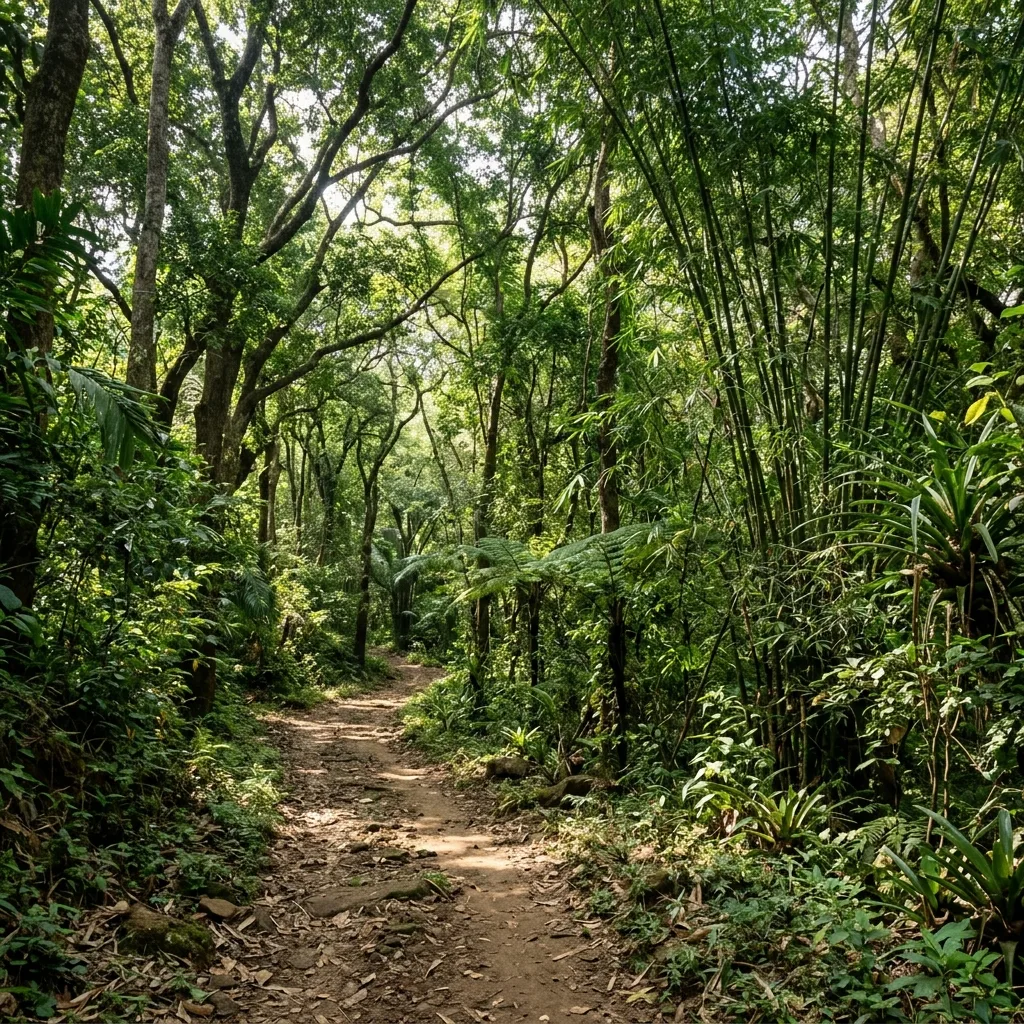
Unlike Goa's beaches, where there's always something happening, Cotigao encourages you to slow your pace. There are no beach shacks, loud cafés, or music playing in the background. Instead, you'll spend your time walking along forest trails, spotting butterflies, listening to birds, and enjoying the quiet that has become increasingly difficult to find in popular tourist destinations.
The sanctuary is particularly popular among birdwatchers and photographers. While sightings of larger mammals like gaur, deer, or wild boar are never guaranteed, the forest is home to a wide variety of birds, butterflies, reptiles, and smaller wildlife. If you're lucky - and more importantly, patient - you might spot animals near the watering holes during the cooler parts of the day.
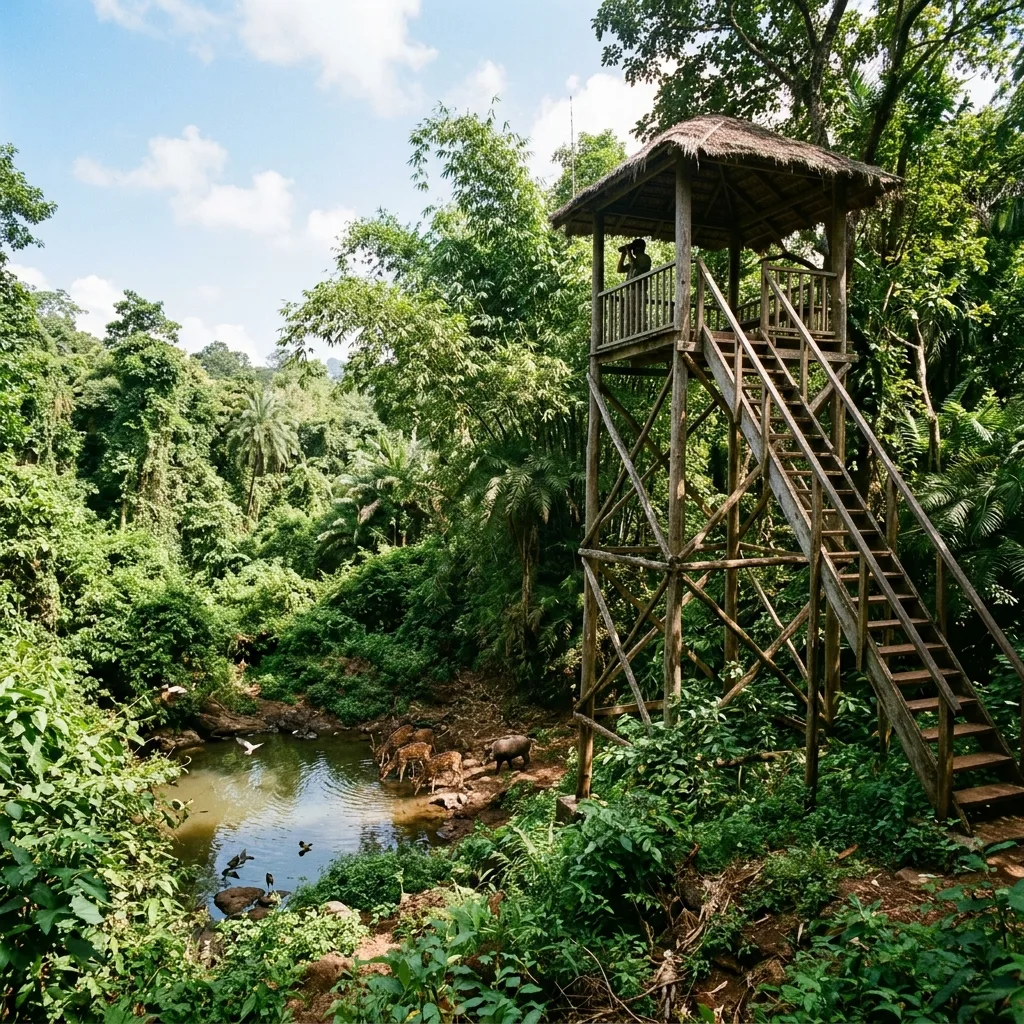
Perhaps the sanctuary's biggest attraction is its treetop watchtower.
Standing several storeys above the forest floor, the watchtower overlooks a natural water source where animals occasionally gather to drink. It's one of the most peaceful spots in the sanctuary and gives visitors a completely different perspective of the forest canopy. Even if you don't spot wildlife, the view itself makes the short walk worthwhile.
That said, it's important to visit with the right expectations.
If your goal is ticking animals off a checklist, you may leave disappointed. But if you enjoy nature walks, quiet surroundings, and exploring places that most Goa itineraries overlook, Cotigao is one of the most rewarding attractions in South Goa.
It's also surprisingly easy to combine with other destinations nearby. Many travellers spend the morning exploring the sanctuary before heading towards Galgibaga Beach, Palolem, or Agonda for lunch and an evening by the sea. The contrast between a peaceful forest in the morning and a sunset on the beach later in the day is one of the reasons Cotigao fits so well into a multi-day South Goa itinerary.
Planning to stay nearby also makes a noticeable difference. Instead of trying to drive down from North Goa for just a few hours in the sanctuary, consider basing yourself around Palolem, Patnem, or Agonda. You'll not only be closer to Cotigao but also within easy reach of attractions like Butterfly Beach, Galgibaga, and Cabo de Rama Fort. If you're booking a villa or vacation rental, it's worth comparing the same property across different platforms first. Since Wayzyy works directly with hosts and doesn't add its own markup, travellers can often find the exact same stay for up to 20% less than on larger booking platforms. If you're spending three or four days exploring South Goa, those savings can easily cover scooter rentals, meals, or another experience during your trip.
What Wildlife Can You Actually See at Cotigao?
One of the biggest misconceptions about Cotigao Wildlife Sanctuary is that you'll arrive and immediately start spotting wildlife around every corner.
The reality is a little different.
Cotigao isn't a safari park, and it isn't designed around guaranteed wildlife sightings. The forest here is dense, the animals are naturally shy, and many of the larger mammals are most active during early mornings, late evenings, or at night. If your expectation is seeing multiple large animals in a couple of hours, you'll probably be disappointed.
But if you appreciate nature as a whole, Cotigao has plenty to offer.
The sanctuary is home to a rich variety of wildlife, including Indian gaur (bison), spotted deer, barking deer, wild boar, porcupines, monkeys, flying squirrels, pangolins, and several species of reptiles. Birdwatchers also visit Cotigao to spot kingfishers, drongos, woodpeckers, hornbills, and many other native and migratory birds depending on the season.
That said, the forest itself is often the biggest attraction.
Walking beneath towering trees, hearing birds call from deep within the canopy, and experiencing complete silence for a few moments is something that's surprisingly rare in Goa's more popular tourist destinations. Even without spotting large wildlife, many visitors leave saying the peaceful atmosphere was worth the trip.
The Watchtower Experience
If there's one place where your chances of seeing wildlife improve, it's the treetop watchtower.
The watchtower overlooks a natural watering hole where animals occasionally gather, particularly during the cooler hours of the day. There's no guarantee you'll see anything dramatic, but spending 20–30 minutes here quietly observing the forest is one of the highlights of visiting Cotigao.
The key word is patience.
Unlike beaches where something is always happening, the forest rewards people who are willing to slow down. Sometimes you'll see a family of deer cautiously approaching the water. Other times, it may simply be colourful birds moving through the trees. Every visit feels a little different, which is exactly why many nature enthusiasts return more than once.
Is Cotigao Good for Birdwatching?
Absolutely.
Even if large mammals remain hidden, bird activity is constant throughout much of the sanctuary. Early mornings are especially rewarding, with dozens of species becoming active shortly after sunrise. If you own binoculars or enjoy wildlife photography, bringing them along can make the experience much more enjoyable.
Should You Visit Just for Wildlife?
Probably not.
Should you visit for the overall experience?
Definitely.
Cotigao works best when you think of it as a forest escape rather than a wildlife safari. You're visiting to enjoy the trails, breathe fresh air, appreciate Goa's biodiversity, and perhaps get lucky with a wildlife sighting along the way.
That's also why many travellers combine Cotigao with nearby attractions instead of making it the only destination for the day. A morning walk through the sanctuary followed by lunch in Palolem or Agonda, and an evening at Galgibaga Beach or Cabo de Rama Fort, creates one of the most balanced South Goa itineraries you'll find.
If you're planning a few days around this region, staying nearby makes exploring much easier. Instead of changing hotels every night, many travellers book a villa or vacation rental in Palolem, Patnem, or Agonda and use it as a base for day trips. When comparing accommodation, it's always worth checking Wayzyy alongside other booking platforms. Since Wayzyy doesn't add an additional markup over the host's pricing, you can often book the same vacation rental for up to 20% less than on larger platforms. Over a three- or four-night stay, that difference can easily add up while letting you stay exactly where you want.
Walking Trails, Watchtower & Things to Do at Cotigao Wildlife Sanctuary
Unlike many tourist attractions in Goa where you simply arrive, take a few photos, and leave, Cotigao is best experienced on foot.
The sanctuary has a network of nature trails that take visitors through dense forests, bamboo groves, streams, and open clearings. These aren't challenging treks, but rather leisurely walks designed to help you experience the forest at its own pace. The trails vary in length, so whether you have an hour or half a day, there's enough to keep you occupied without feeling exhausted.
One of the highlights of these walks is that every section of the sanctuary feels different. Some areas are densely shaded beneath towering trees, while others open into small clearings where sunlight filters through the canopy. Depending on the season, you'll also come across butterflies, birds, and countless varieties of native plants that make Cotigao one of Goa's richest ecological zones.
Climb the Watchtower
If there's one experience you shouldn't miss, it's climbing the treetop watchtower.
Standing high above the forest floor, the tower overlooks a natural watering hole that attracts wildlife throughout the year. While there are no guarantees you'll spot deer or gaur during your visit, the view itself is worth the climb. Looking out across an endless canopy of green gives you a completely different perspective of Goa - one that most visitors never get to see.
Many people spend 20 to 30 minutes here simply listening to the sounds of the forest. Even without wildlife sightings, it's one of the most peaceful moments you'll have during your trip.
Visit the Nature Interpretation Centre
Near the entrance, you'll also find a small Nature Interpretation Centre, which provides information about the sanctuary's biodiversity, native flora, and wildlife.
While it isn't a large museum, it's worth spending a few minutes here before starting your walk. Understanding what species live in the sanctuary often makes the trails far more interesting, as you'll know what to look out for instead of simply walking through the forest.
Photography Opportunities
Cotigao isn't about dramatic landmarks - it's about subtle beauty.
Photographers will find plenty to capture, from towering evergreen trees and winding forest paths to colourful butterflies, birds, mushrooms during the monsoon, and rays of sunlight filtering through the canopy. If you're lucky enough to spot wildlife near the watchtower, that's an added bonus rather than the main objective.
Early morning usually provides the best lighting for photography, while the post-monsoon months bring the forest to life with vibrant shades of green.
How Much Time Should You Spend?
For most visitors, 2 to 3 hours is enough to enjoy Cotigao comfortably.
That gives you enough time to explore one or two trails, climb the watchtower, visit the interpretation centre, and simply enjoy the peaceful surroundings without rushing. If you're particularly interested in birdwatching or nature photography, you could easily spend half a day here.
The sanctuary also works well as part of a larger South Goa itinerary. Many travellers begin their morning at Cotigao, have lunch in Palolem or Patnem, and then head towards Galgibaga Beach or Cabo de Rama Fort later in the day. Because these attractions are all relatively close together, you spend less time driving and more time actually exploring.
That's another reason why staying in South Goa makes so much sense. Instead of making long day trips from North Goa, you can base yourself around Palolem, Agonda, or Patnem and explore one attraction at a time without feeling rushed. If you're booking a villa or holiday home, it's always worth comparing the same property before confirming your reservation. Since Wayzyy doesn't add an extra markup over the host's pricing, travellers can often find the exact same vacation rental for up to 20% less than on larger booking platforms. The money you save can easily go towards scooter rentals, local experiences, or extending your stay by another night.
How to Reach Cotigao Wildlife Sanctuary, Entry Fee & Timings
One of the biggest advantages of visiting Cotigao Wildlife Sanctuary is that it's surprisingly easy to reach if you're already staying in South Goa. Unlike some wildlife reserves that require hours of travel or advance safari bookings, Cotigao can comfortably be explored as a half-day or full-day trip.
The sanctuary is located in Canacona Taluka, close to the Goa-Karnataka border, making it particularly convenient for travellers staying around Palolem, Patnem, Agonda, Rajbag, and Galgibaga.
| Starting Point | Approximate Distance | Travel Time |
|---|---|---|
| Galgibaga Beach | 8 km | 15 minutes |
| Patnem Beach | 10 km | 20 minutes |
| Palolem Beach | 12 km | 20–25 minutes |
| Agonda Beach | 28 km | 40–45 minutes |
| Margao | 45 km | Around 1 hour |
| Panjim | 75 km | Around 2 hours |
If you're staying in North Goa, such as Calangute, Baga, Candolim, or Vagator, the drive can easily take 2.5 to 3 hours each way depending on traffic. While it's possible as a day trip, most travellers find it far more enjoyable to spend a few nights in South Goa and explore nearby attractions at a relaxed pace.
Best Way to Reach
For most visitors, renting a scooter or self-driving a car is the easiest option.
The roads leading to Cotigao are well-maintained, and the drive itself is scenic, passing through small villages, coconut plantations, and stretches of forest. If you're comfortable riding a scooter, it's one of the most enjoyable routes in South Goa.
You can also hire a taxi, especially if you're travelling as a family or in a group. While buses do connect nearby towns, you'll usually need additional local transport to reach the sanctuary entrance, making public transport less convenient for most tourists.
Cotigao Wildlife Sanctuary Timings
The sanctuary is generally open every day from 7:00 AM to 5:30 PM.
If you're hoping to spot wildlife or enjoy the trails before the day gets too warm, arriving early in the morning is highly recommended. The forest is cooler, bird activity is at its peak, and you'll encounter fewer visitors on the walking trails.
Late afternoons are also pleasant, although wildlife sightings tend to become less predictable as visitor numbers increase.
Entry Fee
Cotigao Wildlife Sanctuary charges a nominal entry fee, making it one of the most affordable attractions in South Goa.
Depending on the latest Forest Department regulations, entry charges and camera fees may occasionally change, so it's always worth checking the latest information before your visit. Even with parking and camera charges included, visiting Cotigao remains an inexpensive experience compared to many commercial tourist attractions.
Best Time to Visit
The sanctuary remains open throughout the year, but each season offers a different experience.
October to February is considered the ideal time to visit. The weather is pleasant, humidity is lower, and the walking trails are much more comfortable to explore. It's also the best season for combining Cotigao with nearby beaches and other South Goa attractions.
The monsoon months (June to September) completely transform the sanctuary. The forest becomes incredibly lush, streams begin flowing again, and everything feels fresh and vibrant. If you enjoy greenery and don't mind occasional rain or muddy trails, this can be one of the most beautiful times to visit.
During March to May, temperatures rise significantly. While the forest canopy provides welcome shade, exploring the sanctuary in the afternoon can still feel quite warm. Morning visits are usually the most comfortable during the summer months.
Plan Your Stay Around the Sanctuary
One mistake many visitors make is treating Cotigao as an isolated attraction. In reality, it fits perfectly into a broader South Goa itinerary that includes Palolem Beach, Galgibaga Beach, Butterfly Beach, Cabo de Rama Fort, and Agonda Beach.
Rather than making a long return journey from North Goa, consider spending a few nights nearby. Staying around Palolem, Patnem, or Agonda allows you to explore the sanctuary at a relaxed pace while also enjoying South Goa's beaches, cafés, and scenic drives.
Planning your stay nearby? Get it up to 20% cheaper on Wayzyy
Statistically speaking, global booking platforms mark up rates by up to 20% to cover commissions and service fees. Because Wayzyy doesn't add any markup from our end, you get direct direct-from-host pricing for the same property.
Our team is working hard to get in front of your eyes. With over 500 properties and 50 hosts already onboarding, we are increasing the options before our launch so that we have choices for all your travel needs.
If you're booking accommodation, it's always worth comparing prices before confirming. Since Wayzyy connects travellers directly with hosts without adding an additional platform markup, you can often find the exact same villa or vacation rental for up to 20% less than on larger booking platforms. For a three- or four-night South Goa trip, those savings can easily cover your scooter rental, meals, or even another local experience.
Now that you know how to get there and when to visit, let's look at a few practical tips and common mistakes that can make your visit to Cotigao Wildlife Sanctuary much more enjoyable, especially if it's your first time exploring a tropical forest.
Practical Tips & Common Mistakes to Avoid
Cotigao Wildlife Sanctuary is one of those places where the experience depends far more on your expectations than your itinerary. If you arrive expecting a zoo or a commercial safari park, you'll probably leave disappointed. But if you come looking for peaceful walks, untouched forests, and a slower side of Goa, it can easily become one of the highlights of your trip.
Here are a few things worth keeping in mind before you visit.
- 1. Don't Visit Expecting Guaranteed Wildlife SightingsThis is by far the biggest mistake first-time visitors make. Cotigao is a protected forest, not a safari park. The animals here live in their natural habitat and are free to move wherever they want. Some visitors get lucky and spot deer, gaur, or monkeys, while others may spend hours exploring without seeing any large mammals. Instead of measuring your visit by how many animals you spot, enjoy the forest itself.
- 2. Arrive EarlyIf you're planning to visit, try reaching the sanctuary soon after it opens. The weather is cooler, bird activity is at its highest, and you'll have the trails largely to yourself. As the day gets warmer, wildlife becomes less active, and walking through the forest can feel more tiring, especially during the summer months.
- 3. Wear Comfortable ShoesUnlike visiting a beach, you'll be walking through forest trails for a couple of hours. Comfortable walking shoes or sports shoes are much better than flip-flops. During the monsoon, some trails can become muddy and slippery, so footwear with good grip makes a noticeable difference.
- 4. Carry the EssentialsThe sanctuary has basic visitor facilities, but it's always better to come prepared. Carry a reusable water bottle, sunglasses, mosquito repellent, sunscreen, a light cap, and binoculars. Travelling light is key.
- 5. Keep Noise to a MinimumOne of the reasons Cotigao feels so different from Goa's beaches is the silence. Speaking softly, avoiding loud music, and respecting the natural surroundings not only improves your own experience but also increases the chances of spotting birds and wildlife.
- 6. Don't Try to Cover Everything in One DayMany visitors staying in North Goa attempt to visit Dudhsagar, Cotigao, Palolem, and Cabo de Rama in a single day. Practically, you'll spend most of your holiday driving. A much better approach is to slow down and spend three or four days in South Goa.
Choosing accommodation in the right location makes that much easier. Instead of changing hotels every night or commuting from North Goa, many travellers use Palolem, Patnem, or Agonda as their base and take short day trips to Cotigao, Galgibaga, Butterfly Beach, and Cabo de Rama.
If you're booking a villa or vacation rental, it's also worth comparing the same property before confirming your reservation. Wayzyy works directly with hosts and doesn't add an extra markup over their listed pricing, so you'll often find the exact same property for up to 20% less than on larger booking platforms. That means you can spend less on accommodation and more on experiences.
Frequently Asked Questions
Final Thoughts
Cotigao Wildlife Sanctuary proves that Goa is much more than beaches and nightlife. Hidden beneath a dense canopy of towering trees, it offers a completely different side of the state - one defined by quiet walking trails, rich biodiversity, and the chance to disconnect from the usual tourist circuit.
It may not offer guaranteed wildlife sightings, but that's part of its charm. Every visit is different. Some travellers leave talking about birds they spotted from the watchtower, others remember the peaceful forest trails, and many simply appreciate spending a few hours surrounded by nature.
The best way to experience it is to include it as part of a slower South Goa itinerary. Combine it with Palolem, Patnem, Agonda, Galgibaga Beach, or Cabo de Rama Fort, and you'll discover a side of Goa that many visitors never get to see.
If you're planning to stay in South Goa, don't forget to compare accommodation before booking. Wayzyy connects you directly with hosts without adding an extra platform markup, which means you can often book the exact same villa or vacation rental for up to 20% less than on larger booking platforms. It's a smarter way to book - and it leaves more of your budget for the experiences that make a Goa trip memorable.
Want to list your villa on Wayzyy?
Email us at hello@wayzyy.com - Wayzyy is launching soon in Goa.