
GST for Airbnb Hosts in India (2026): Do You Need to Pay?
The ₹20 lakh threshold, the new 5% and 18% rates, who pays GST on a platform booking, and the TDS platforms deduct. GST for short-term rental hosts, explained simply.
Published 25 October 2026
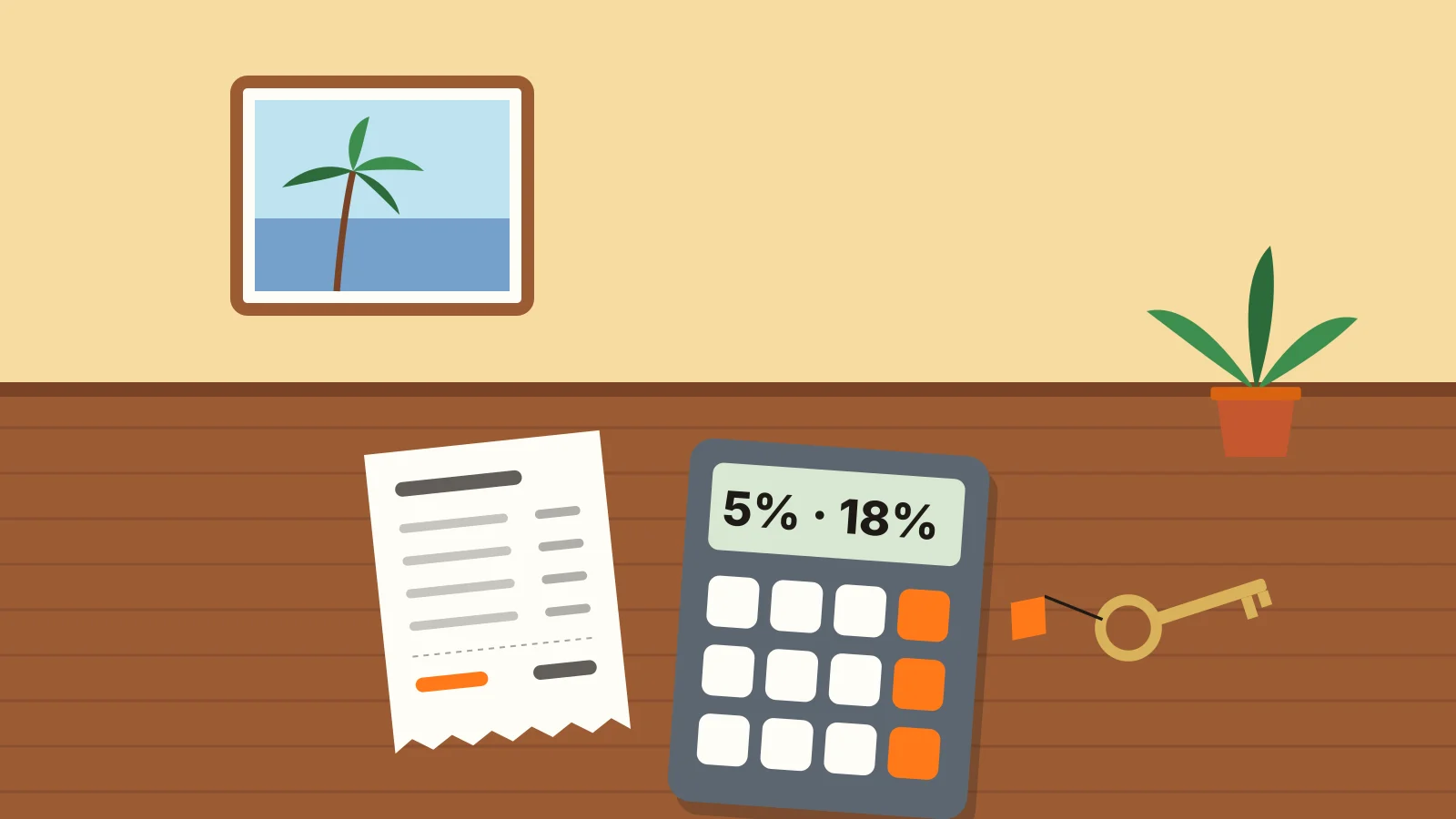
Short answer: Airbnb hosts in India only need GST registration once their turnover crosses ₹20 lakh a year. Below that, GST on bookings made through Airbnb is generally paid by Airbnb itself. The rate depends on your nightly price: 5% (without input tax credit) for stays up to ₹7,500 per unit per night, and 18% (with input tax credit) above that. These rates have applied since 22 September 2025.
GST is the part of hosting most people find confusing, mostly because the answer depends on three things: how much you earn, how much you charge per night, and whether the booking came through a platform. This page walks through each one. It's written for hosts in Goa, but the GST rules are the same across India.
Do you need to register for GST?
Only if your aggregate turnover crosses ₹20 lakh in a financial year. That's the threshold for service providers in Goa and most Indian states. Turnover means all your taxable income from the business, across every platform and direct booking, not just Airbnb.
GST registration is completely separate from your Goa Tourism registration. Tourism registration is required for every short-term rental, whatever it earns. GST registration only kicks in above ₹20 lakh.
Short stays aren't "rent"
A common assumption is that renting out a home is exempt from GST. That exemption covers letting a residential dwelling for someone to live in, like a tenant on an 11-month lease. A tourist staying a few nights is different. Short stays are treated as accommodation services, the same category as hotels and guest houses, and they're taxable.
What rate applies?
The GST Council cut the rate on budget accommodation in September 2025. From 22 September 2025:
| Price per unit per night | GST rate | Input tax credit |
|---|---|---|
| Up to ₹7,500 | 5% | Not available |
| Above ₹7,500 | 18% | Available |
Before the change, stays up to ₹7,500 were taxed at 12% with input tax credit. The new 5% rate is lower, but it comes without input tax credit, so registered hosts can no longer offset GST paid on their own expenses against it.
The rate goes by the price per unit per night. For a whole villa rented as one unit, that's the villa's nightly rate. A ₹12,000-a-night villa falls in the 18% slab. A ₹3,000 homestay room falls in the 5% slab. If you price close to ₹7,500, the line matters: a villa at ₹7,400 and one at ₹7,600 sit in different slabs.
Who actually pays: you or Airbnb?
This is where platform bookings differ from direct ones. Under section 9(5) of the CGST Act, the government has notified accommodation services as a category where the e-commerce operator, the platform, is responsible for paying GST. The exception is when the host is liable to register for GST themselves.
- Host below ₹20 lakh, booking through Airbnb or another platform: the platform pays GST on the booking. You don't register or file.
- Host above ₹20 lakh (or voluntarily registered): you charge GST on your bookings and pay it yourself, and you file regular GST returns.
- Direct bookings (WhatsApp, your own website): no platform is involved, so if you're registered, you charge GST. If you're below the threshold and not registered, there's no GST to charge.
The ₹20 lakh trapTurnover counts across every channel. A host making ₹12 lakh on Airbnb and ₹10 lakh from direct bookings has crossed the threshold, even though neither channel alone has.
What about income tax?
GST and income tax are separate. Whatever your GST position, rental income from short stays is taxable as income. Platforms acting as e-commerce operators deduct 0.1% TDS on the gross amount of your bookings. This was section 194-O of the old Income-tax Act; since 1 April 2026 it's section 393(1) of the Income-tax Act, 2025, at the same rate. It shows in your tax statement, and you claim it when you file your return. Whether your income is treated as house property or business income depends on how you run it, so this is a question for a chartered accountant.
A quick checklist for hosts
- Add up your annual turnover across every platform and direct booking.
- If it's under ₹20 lakh and you only take platform bookings, you don't need to register for GST.
- If it's over ₹20 lakh, register, charge 5% or 18% depending on your nightly rate, and file returns.
- Keep your tourism registration, Form XI and Form C up to date. GST doesn't replace any of them.
- Claim the 0.1% TDS when you file income tax.
If you're working out what hosting actually earns after fees and tax, our pieces on the hidden costs of running an Airbnb and what a Goa vacation rental can earn go further.
This page explains the rules as published and isn't tax advice. GST and income tax depend on your exact situation, so confirm with a chartered accountant before you file.
Frequently Asked Questions
Do Airbnb hosts in India have to pay GST?+
What is the GST rate on Airbnb and homestay stays?+
Who pays GST on an Airbnb booking in India, the host or Airbnb?+
Is short-term rental income exempt from GST like house rent?+
Does the ₹7,500 limit apply per room or per villa?+
Does Airbnb deduct tax from host payouts in India?+
Do I need GST registration for my Goa homestay?+
Want to list your villa on Wayzyy?
Email us at hello@wayzyy.com - Wayzyy is launching soon in Goa.