
Airbnb vs Booking.com vs Wayzyy: A Side-by-Side Comparison (2026)
An honest, side-by-side comparison of Airbnb, Booking.com, and Wayzyy for vacation rental hosts. Compare fees, discovery, target audiences, and long-term profitability.
Published 31 July 2026
Choosing a booking platform isn't just about getting more bookings. It's about choosing a business model that still makes sense years after your first guest checks in.
If you've recently purchased a villa, holiday home or homestay - especially in a market like Goa - one of the first questions you'll probably ask is surprisingly simple.
Where should I list my property?
Most property owners immediately think of Airbnb. Others choose Booking.com because of its global reach. Over the last few months, we've also spoken with many hosts who were actively looking for alternatives that offered better economics and a more host-focused approach.
Interestingly, almost nobody begins by comparing business models.
Most comparisons revolve around traffic, downloads, popularity or brand recognition. Those factors certainly matter, but they don't tell the complete story. Once your property starts receiving consistent bookings, the platform you choose influences far more than visibility. Guest communication, payout structures, pricing flexibility, support, operating costs and long-term profitability all become part of the equation.
That's why we believe choosing a booking platform is less like selecting an app and more like choosing a long-term business partner. A decision made during your first week as a host can quietly shape your margins for years.
While building Wayzyy, we spent months speaking with property owners across Goa and analysing how experienced hosts approached platform selection. One thing became clear very quickly: very few successful operators rely on a single platform forever.
Instead, they understand the strengths of each marketplace and use them strategically depending on the type of property they manage, the guests they want to attract and the kind of business they're trying to build. A beachfront villa catering to families has very different requirements from a city apartment targeting business travellers. Similarly, someone managing ten vacation homes evaluates booking platforms very differently from a homeowner listing their first property.
That's exactly why there's no universal answer to the question, "Which platform is the best?"
Each platform solves a different problem.
Airbnb changed the way people think about short-term rentals by making unique homes discoverable across the world. Booking.com built one of the largest travel marketplaces and continues to dominate hotel bookings while expanding aggressively into vacation rentals. Wayzyy was created with a different objective altogether - to build a platform where independent hosts could retain more of what they earn while giving travellers access to high-quality stays with transparent pricing.
Comparing these platforms only on the number of bookings would miss the bigger picture. A better question is this: Which platform aligns with the kind of business you want to build?
That's exactly what we'll help you answer in this guide. Rather than declaring a single winner, we'll compare Airbnb, Booking.com and Wayzyy across the factors that matter most to property owners - from guest reach and platform fees to host experience, pricing philosophy and long-term sustainability.
Because choosing a booking platform isn't about winning your first booking. It's about building a business that still feels rewarding after your hundredth.
Every Platform Was Built to Solve a Different Problem
One of the biggest mistakes first-time hosts make is assuming every booking platform works the same way. At first glance, they all appear similar. You create a listing, upload photographs, set your nightly price and wait for bookings to come in. From the outside, the experience feels almost identical regardless of which platform you're using.
Look a little deeper, however, and you'll notice that each marketplace has been built with a very different audience in mind.
Airbnb changed the travel industry by making unique stays accessible to millions of people around the world. Villas, treehouses, beach cottages and family homes suddenly became alternatives to traditional hotels, opening up an entirely new category of travel. Even today, it's the first platform many travellers think of when they're looking for a holiday home or a unique place to stay.
Booking.com entered the vacation rental space from a different direction. Its foundation has always been hotels, business travel and global accommodation. Over time, apartments, villas and holiday homes became an important part of its inventory, giving travellers more choice while allowing property owners to tap into one of the world's largest travel marketplaces. For hosts targeting international tourists or guests who prefer comparing hotels and vacation rentals in one place, that reach can be extremely valuable.
Wayzyy started with a completely different question. Instead of asking how to attract the largest number of listings, we asked how independent hosts could build healthier businesses over the long term.
During our conversations with property owners across Goa, many of them weren't asking for another marketplace with millions of users. What they wanted was a platform that respected the economics of hosting, helped them retain more of their earnings and connected them with travellers looking for high-quality stays without unnecessary complexity.
That difference in philosophy influences almost every decision a platform makes. Some marketplaces optimise for global discovery. Others prioritise inventory growth or business travel. Our focus has always been on creating an ecosystem where hosts and guests both benefit from transparent pricing, better hospitality and stronger long-term relationships.
None of those approaches are inherently right or wrong. Everything depends on the type of property you own and the guests you're trying to attract.
A one-bedroom apartment near a business district has very different requirements from a luxury villa overlooking the beach in North Goa. Likewise, a family travelling with grandparents and young children isn't looking for the same experience as a solo traveller visiting for a weekend.
That's why choosing the right platform shouldn't start with a comparison table. It should begin with understanding your property. Once you know who your ideal guest is, comparing platforms becomes much easier because you'll be evaluating them against your own business goals rather than simply looking at which company has the biggest name.
That's exactly where most comparisons on the internet stop. We're going to take it one step further by looking at what actually matters once your listing goes live - how guests discover your property, how each platform earns money and, ultimately, how those decisions affect the profitability of your business over the years.
Where Do Your Guests Actually Come From?
A booking platform doesn't just determine where your property appears. It also influences who eventually walks through your front door. That's something many first-time hosts overlook. They compare platforms based on brand recognition or the number of monthly users without asking a far more important question: Are those the guests I actually want to attract?
Different platforms attract different travel behaviours, and understanding those patterns helps you market your property much more effectively.
Airbnb has built its reputation around experiences. Many travellers visit Airbnb because they're specifically looking for something unique - a beachfront villa, a mountain cabin, a heritage home or a space that feels different from a traditional hotel. Guests booking through Airbnb are often comfortable staying in residential neighbourhoods and usually expect a more personal experience.
Booking.com serves a much broader audience. Business travellers, international tourists, families on road trips and even last-minute bookers regularly use the platform because they can compare hotels, apartments, resorts and vacation rentals in a single search. For many people, Booking.com isn't necessarily a vacation rental platform - it's simply where they begin planning any trip.
Goa is slightly different. The majority of travellers aren't looking for just a room. They're looking for a holiday.
Families want enough space for children to play without booking multiple hotel rooms. Groups of friends usually prefer a private pool over a crowded resort. Long weekend travellers appreciate having a kitchen, dedicated parking and common spaces where everyone can spend time together. Remote professionals often search for reliable Wi-Fi and quiet workspaces that make extended stays comfortable.
Those expectations naturally align with homestays and private villas. That's one of the reasons Goa has seen such strong growth in the short-term rental market over the last few years. Instead of squeezing four or five people into separate hotel rooms, travellers increasingly prefer booking an entire home where they can cook together, relax together and enjoy the destination at their own pace.
That shift also influenced the way we approached Wayzyy. Rather than trying to become another platform for every type of accommodation imaginable, we decided to focus on what we understood best - quality vacation homes, villas and family-friendly stays. Our goal wasn't simply to increase the number of listings available. We wanted guests to discover properties where hospitality, comfort and transparency mattered just as much as location.
Of course, no single platform has a monopoly on good guests. Excellent travellers book through Airbnb every day. The same is true for Booking.com and every other marketplace. What changes is the intent behind the booking and the overall experience those platforms are designed to deliver.
That's why experienced hosts rarely depend on just one source of demand. Many successful operators maintain a presence across multiple platforms while gradually building direct relationships with returning guests. Diversifying booking channels reduces risk, improves occupancy throughout the year and prevents the business from becoming overly dependent on the algorithm or policies of any single marketplace.
How Does Each Platform Actually Make Money?
One question we always encourage new hosts to ask is surprisingly simple: How does the platform make money when my property gets booked?
Most people compare booking platforms based on traffic, reviews or app downloads. Very few spend time understanding the business model behind each marketplace, even though that decision directly affects profitability for years to come.
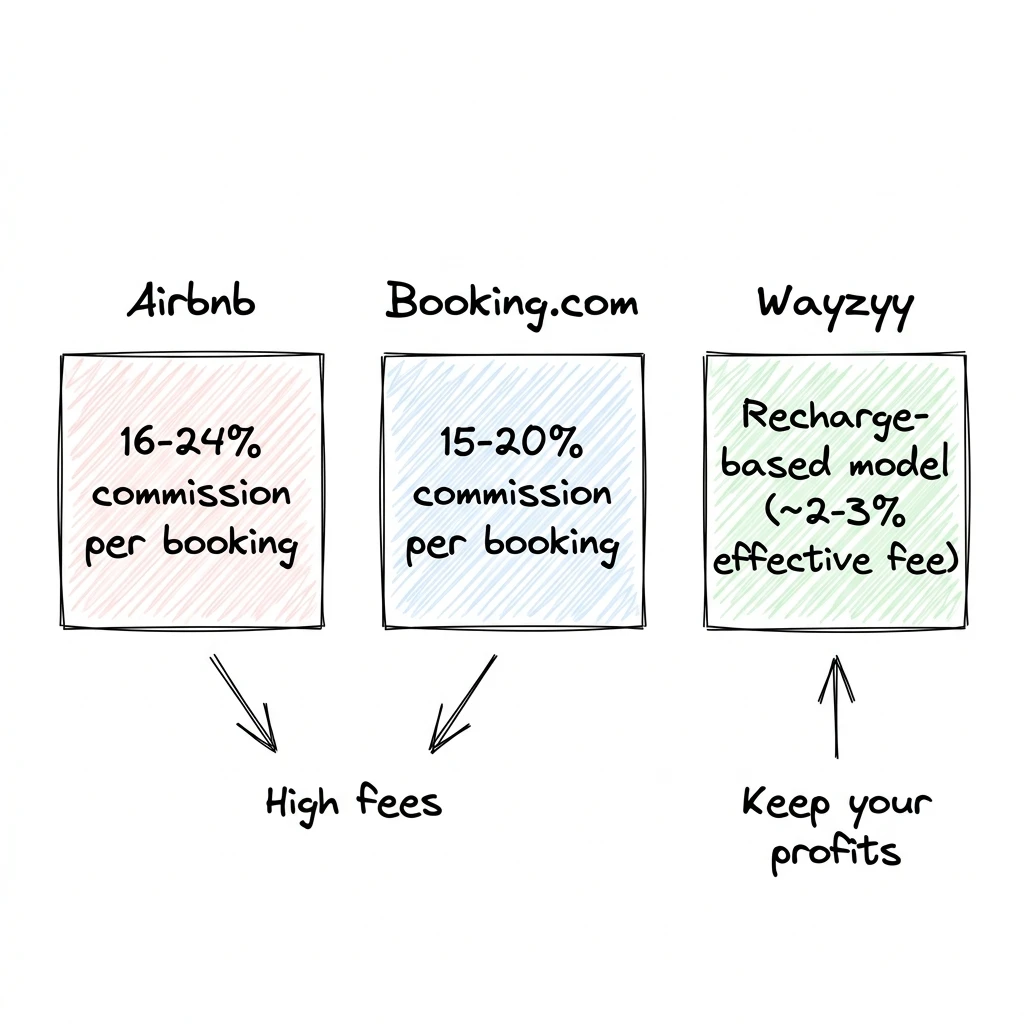
Airbnb primarily earns revenue by charging fees on bookings. Depending on the pricing structure, hosts and guests may both contribute towards the platform's revenue. In practice, many hosts find that the effective cost associated with a booking can range between 16% and 24% once the overall fee structure is taken into account. That doesn't mean every reservation falls within the same percentage, but it does highlight why experienced operators pay close attention to their booking economics instead of looking only at occupancy.
Booking.com follows a different approach. Traditionally, hosts pay a commission on confirmed bookings while guests usually see a single final checkout price. Commission rates vary depending on location, agreements and visibility programmes, but the underlying principle remains similar - the platform earns a percentage whenever your property generates revenue.
For many hosts, that model works perfectly well. After all, global distribution, payment infrastructure, customer support and traveller acquisition all cost money. Booking platforms create enormous value by connecting millions of travellers with accommodation providers across the world. Nobody expects those services to exist without a sustainable business model behind them.
The real question isn't whether platforms should earn revenue. It's whether the pricing model continues to make sense as your business grows.
Imagine spending years improving your property. One season you renovate the bedrooms. Another year you build a private pool. Faster internet gets installed, professional photography is updated and housekeeping standards continue improving. Every investment comes directly from the host, yet the platform commission generally increases alongside your revenue because it's tied to every successful booking.
That's the part many independent property owners begin questioning. Higher earnings don't necessarily translate into proportionally higher profits if recurring costs continue growing at the same pace.
That observation shaped the way we approached Wayzyy. Rather than asking how much commission could be charged on every reservation, we started with a different question: What if hosts could keep more of the value they create?
Instead of relying on a traditional high-percentage commission model, Wayzyy was designed around predictable platform costs that allow property owners to retain a significantly larger share of their revenue over time. The idea wasn't to eliminate platform fees altogether - our goal was simply to create a model where successful hosts benefit the most from their own success rather than seeing platform costs rise in proportion to every booking.
That difference becomes more meaningful as a property matures. During the first few months, the gap between different pricing models may not seem dramatic. Fast forward a few years, however, and the cumulative savings can often be redirected towards renovations, better amenities, additional staff, improved guest experiences or even expanding into a second property.
Ultimately, that's how we think booking platforms should be evaluated. Not by asking which one charges the lowest fee on a single reservation. Instead, ask a much bigger question: Which platform leaves your business in a stronger position five years from now?
Airbnb vs Booking.com vs Wayzyy: A Side-by-Side Comparison
By now, you've probably realised there isn't a single platform that's objectively better than every other option.
Each one was built with a different philosophy, attracts a different audience and supports hosts in different ways. That's why experienced operators don't simply ask which platform has the largest number of users - they ask which platform aligns with the kind of business they're trying to build.
To make the comparison easier, here's a high-level overview of where each platform performs best.
| Category | Airbnb | Booking.com | Wayzyy |
|---|---|---|---|
| Primary Audience | Experience seekers, families, international travellers | Hotels, apartments, business travellers, global tourists | Families, groups, villa travellers, holiday homes |
| Best Property Type | Apartments, villas, unique stays | Hotels, apartments, vacation rentals | Villas, homestays, premium vacation rentals |
| Discovery | Strong global marketplace | Massive travel marketplace | Curated, quality-focused discovery |
| Pricing Model | Percentage-based booking fees | Commission-based | Recharge-based model |
| Best For | Hosts looking for worldwide exposure | Properties targeting hotel-style bookings and international reach | Independent hosts who want stronger long-term unit economics |
| Guest Experience | Experience-focused | Convenience-focused | Hospitality-focused |
| Goa Suitability | Excellent | Strong | Built around Goa and expanding into similar leisure destinations |
| Long-Term Philosophy | Global marketplace | Global travel platform | Sustainable growth for independent hosts |
Looking at the table, one thing becomes obvious: choosing a platform isn't simply about finding the one with the highest traffic.
Imagine you're running a boutique hotel in the middle of a busy city. Booking.com may naturally become an important source of reservations because travellers are already comparing hotels, apartments and business accommodation in one place. Now imagine you own a private villa in North Goa where families stay for five nights, cook together, spend evenings by the pool and treat the property as their home during the trip. That guest journey is completely different, which means the platform serving those guests should also understand those expectations.
That's one of the biggest reasons we decided to build Wayzyy around vacation rentals rather than trying to become everything for everyone.
Instead of filling the platform with every possible type of accommodation, we've focused on creating a marketplace where quality homes receive the attention they deserve and travellers can confidently book properties designed around comfort, hospitality and transparency. That philosophy naturally resonates with destinations like Goa, where many visitors aren't simply looking for a place to sleep - they're looking for a place to spend time together.
Of course, none of this means you should only list on one platform. In fact, we'd argue the opposite.
Many experienced hosts treat different booking platforms as different marketing channels. Airbnb might bring one type of traveller, Booking.com another and direct bookings gradually become more important as repeat guests return year after year. Diversifying your booking sources reduces dependency on any single marketplace while helping maintain occupancy throughout the year.
That's where the real comparison begins. It's no longer about choosing between three logos. It's about deciding which combination of platforms helps you build the healthiest business over the next five or ten years.
See the actual numbers for your villa
Rather than estimate, plug in your real booking value and compare take-home earnings on Airbnb vs Wayzyy directly with our host earnings calculator.
Top Airbnb Alternatives & Apps Like Airbnb in India (2026 Comparison)
As travel preferences evolve, both hosts and guests in India are actively searching for an Airbnb alternative in India or apps like Airbnb in India that offer better local support, lower fee structures, and tailored guest verification.
While global sites like Airbnb and Booking.com dominate headline search volume, Indian property owners and travelers have distinct options available:
- Wayzyy: A direct-booking, host-first Airbnb competitor in India built specifically for villas and holiday homes in Goa. Uses a flat credit model (down to ~2% effective cost) instead of taking a 15–20% cut on every booking. Every host and guest goes through DigiLocker Aadhaar verification for maximum security.
- Direct Booking Websites & Local Platforms: Property owners running direct booking engines avoid platform commissions altogether, though they require independent marketing and manual payment handling.
- International OTAs (Airbnb, Booking.com, Agoda): High global visibility and international tourist reach, but tied to high commission percentages and generic overseas customer support.
If you are searching for a website like Airbnb in India or a similar app to Airbnb that treats hosts as long-term partners rather than lead targets, explore our Wayzyy Airbnb Alternative Page.
Looking for Alternatives to Isprava in Goa? Luxury Villa Options Compared
Luxury travelers looking for estate villas often query search engines for best alternatives to Isprava in Goa. Isprava is well known for developing high-end Mediterranean and Portuguese heritage villas in North Goa villages like Assagao, Anjuna, and Siolim.
However, renting or hosting through centralized luxury agencies often comes with massive management markups. For travelers asking "Are there any luxury vacation rentals available in Goa, India directly from owners?", alternative choices include:
- Independent Luxury Estate Villas on Wayzyy: Private 3-to-6 bedroom pool villas in Assagao, Siolim, and Mandrem listed directly by local Goan owners and boutique villa managers, giving guests luxury amenities without double-digit agency markups.
- Boutique Heritage Homestays: Restored Indo-Portuguese mansions offering private chefs, infinity pools, and lush tropical gardens.
Whether comparing Airbnb vs other options for Airbnb in Goa or looking for luxury villa rentals, booking directly with verified local hosts provides better pricing transparency and personalized hospitality.
So...Which Platform Would We Choose If We Were Starting Today?
After spending months speaking with hosts and understanding how different booking platforms operate, we've realised there isn't a single answer that works for everyone.
Everything depends on the property you own, the guests you want to attract and the kind of business you're trying to build over the next few years.
If we had purchased a city apartment catering primarily to business travellers or short overnight stays, Booking.com would almost certainly be part of our strategy. Its global reach and strong presence in the hotel industry make it an excellent channel for properties that rely on a steady flow of domestic and international travellers.
Ignoring Airbnb would also be difficult. Few companies have changed the short-term rental industry as dramatically as Airbnb. The platform introduced millions of people to unique stays, holiday homes and local experiences, making it one of the strongest discovery channels available.
Our thinking would begin to change, however, if we were launching a villa, a premium homestay or a family-focused vacation rental in destinations like Goa.
Travellers visiting Goa rarely book just a place to sleep. Families want enough room for everyone to stay together, groups of friends look for private pools and shared living spaces, while longer-stay guests appreciate fully equipped kitchens, dedicated workspaces and the comfort of feeling at home throughout their trip. Those expectations are very different from what someone booking a single hotel room for one night is usually looking for.
That's exactly the segment we built Wayzyy for.
Instead of creating another marketplace that earns a sizeable percentage from every reservation, we questioned whether there was a better way to support independent hosts. Most property owners already spend heavily on housekeeping, maintenance, caretakers, utilities and continuous upgrades. Watching another 15–16% or more disappear from every successful booking makes it much harder to reinvest in the business over time.
Our approach is different. Wayzyy works on a recharge-based credit model. Hosts purchase booking credits in advance, and as booking volume grows, the effective platform cost typically comes down to around 2–3% of the booking value rather than losing a large percentage on every reservation. Instead of increasing the platform's earnings every time your business grows, that difference allows more of your revenue to stay exactly where it belongs - with the host.
Think about what those savings can do over the course of a year. Rather than paying higher recurring commissions, that money could fund a full-time caretaker, renovate a bedroom, upgrade your swimming pool, improve Wi-Fi, replace ageing furniture or simply create a financial buffer during the quieter months. Every improvement benefits the next guest, strengthens reviews and increases the long-term value of the property.
If we were launching our first villa in Goa today, we still wouldn't rely on only one platform.
Airbnb would help us reach international travellers. Booking.com would continue bringing guests who naturally search within its ecosystem. Alongside those channels, we'd also choose a platform like Wayzyy because its business model is designed around helping independent hosts retain more of what they earn instead of paying a large commission every time someone books.
That, more than anything else, has been our biggest takeaway while building Wayzyy. The most successful hosts aren't only thinking about their next reservation. They're thinking about what their business will look like after five years, hundreds of bookings and countless improvements to their property.
Choosing a booking platform isn't simply about visibility: it's about selecting a business model that gives you the best chance of building a profitable and sustainable hospitality business over the long term.
Final Thoughts
Choosing a booking platform is one of the first decisions you'll make as a host. It shouldn't be the only one.
Long before the first guest arrives, you'll decide how you want to run your business. Some hosts compete on the lowest price. Others invest in exceptional hospitality. Many focus on creating memorable spaces that guests recommend to their friends and family. Those choices have a much bigger impact on long-term success than simply deciding where the listing goes live.
Technology should support those decisions rather than dictate them. A booking platform is ultimately a distribution channel. It can introduce your property to travellers across the world, simplify reservations and build trust with guests who have never stayed with you before. None of those things, however, replace the effort that goes into maintaining a beautiful home or delivering an unforgettable experience.
Hospitality has always been created by people. Platforms simply make it easier for those people to be discovered.
That's also why we don't believe hosts should think in terms of loyalty to one marketplace. Successful operators usually diversify their distribution, learn what works for different guest segments and gradually build a business that's resilient enough to adapt as the industry evolves. Depending entirely on a single source of bookings may feel convenient in the beginning, but building multiple channels creates far greater stability over the long run.
Goa is a perfect example of why that matters. The market continues to evolve every year. Families are choosing private villas over multiple hotel rooms, groups of friends are looking for homes where they can spend time together and longer stays have become increasingly common as remote work makes flexible travel easier. Those changing travel patterns create opportunities for hosts who understand what modern travellers actually value instead of simply following trends.
Building Wayzyy has reinforced one lesson above everything else: hosts don't just need another place to list their property. They need a partner that understands hospitality, respects the economics of running a vacation rental and genuinely wants them to succeed over the long term.
That's the philosophy we've carried into every decision we've made. Rather than asking how many bookings we can process, we spend more time asking how we can help independent hosts build stronger businesses. Better economics allow owners to invest back into their homes. Better homes create happier guests. Happier guests leave stronger reviews, recommend the property to others and return for future holidays. Over time, that positive cycle benefits everyone involved.
Airbnb deserves credit for transforming the way people travel. Booking.com has built one of the world's largest travel marketplaces and continues connecting millions of travellers with accommodation every single day.
Wayzyy isn't trying to erase what those platforms have built. We're trying to solve a different problem. Our mission is to help independent hosts - especially those managing villas, homestays and vacation rentals in destinations like Goa - build businesses that remain profitable, sustainable and rewarding for years to come.
At the end of the day, the best platform isn't necessarily the one with the biggest brand or the highest number of listings: it's the one that helps you build the kind of hosting business you're proud to run five years from now.
Frequently Asked Questions
Want to list your villa on Wayzyy?
Email us at hello@wayzyy.com - Wayzyy is launching soon in Goa.